

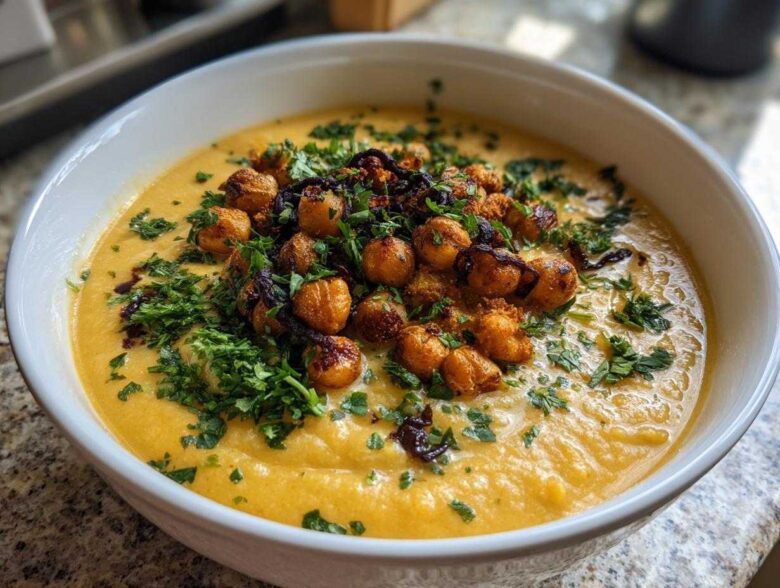
Oh my gosh, are you tired of soups that taste like they came straight out of a can? Because I certainly was! Most chickpea and potato recipes are fine, but they’re just… fine. I spent years tweaking my version of what I call Mastering Chickpea Potato Soup Journey. It started as a weeknight staple, and honestly, it was a little bland until I figured out the texture game. Trust me, we aren’t just making soup here; we are building layers of flavor you can actually taste!
I went through three different kinds of potatoes and seven spice combinations before I landed on this perfect blend that makes your kitchen smell incredible. You won’t find this level of detail in some quick recipe card; this is the long haul—the actual journey to making a comforting stew that tastes like it simmered for two days! For more delicious deep dives into our favorite cooking techniques, check out our general full recipe archive for inspiration.
The Foundation: Ingredients for Mastering Chickpea Potato Soup Journey
When you’re on this kind of soup journey, the ingredients matter more than ever. We aren’t throwing random things in a pot; we are being intentional about texture and depth! This is the part of the process where we do a little **deep dive into chickpea soup ingredients** to make sure everything is pulling its weight. I’ve learned that substitutes here can ruin the whole vibe, so stick close to the list.
The type of potato you pick is absolutely non-negotiable for the right mouthfeel. Forget the fluffy Russets if you want something dreamy!
Selecting Starches and Legumes for Optimal Results
I swear by Yukon Gold potatoes here. They hold their shape better than others during that simmer time, which keeps the soup from turning into total baby food. We need some structure! As for the chickpeas, we’re using the whole can, but we split them up for a reason. A small handful gets roasted separately—that little crunch is the secret weapon against soup monotony. It gives you that satisfying textural contrast, which is a huge part of mastering this dish.
Building Depth: The Flavor Base of Your Chickpea Potato Soup
We rely on the classic mirepoix—onion, celery, and carrots—to set the stage. But the real magic comes right after the veggies soften. That’s when we introduce the spice trio! Cumin, smoked paprika, and turmeric go in raw, and we toast them quickly in the oil. Trust me on this: blooming your spices transforms them from dusty additions into rich, aromatic powerhouses. It’s simple, but it’s what separates a gourmet batch from a basic one.
Step-by-Step Instructions for Mastering Chickpea Potato Soup Journey
Okay, deep breath! This is the moment where all that ingredient prep pays off. Remember, we are doing a complete **from scratch chickpea potato soup tutorial** today, so take your time. We have a few key moves here that really elevate this recipe above anything else you’ve tried. We’re talking texture and that deep simmer flavor, so follow these steps closely!
Texture Technique 1: Roasting Chickpeas for Crunch
Don’t skip this part just because it’s an extra tray! Take that reserved half-cup of chickpeas, toss them with just a tiny bit of oil and some salt, and pop them into your preheated 400°F oven. They need about 12 to 15 minutes until they look golden and just start to get a little crisp. These are our little textural surprises that we use as topping later. Set them aside to cool; they are waiting for their big moment!
Flavor Building: Mastering Chickpea Potato Soup Journey Aromatics
Back to the stove! Get that tablespoon of olive oil hot in your big pot. Add the onions, celery, and carrots and cook them down until they are tender—about seven minutes. Once they are soft, rush in with your garlic and your bloomed spices—the cumin, paprika, turmeric, and cayenne if you like a little kick. You have to stir constantly for that minute until the smell just explodes out of the pot. That’s flavor setting its roots! For more ideas on hearty cooking, you should check out how we approach a hearty vegetable beef soup.
Now toss in your cubed Yukon Golds, the rest of those drained chickpeas, the broth, the tomatoes (undrained—we need that liquid!), the bay leaf, and the thyme. Bring it up to a boil, then drop the heat way down, cover it up, and let it simmer for about 15 minutes until those potatoes are totally soft when you poke them.
Texture Technique 2: Achieving Creaminess Without Dairy
This is where the magic happens for that perfect body. Pull out that bay leaf—we don’t want anyone biting into that! Then, grab your immersion blender. Stick it right into the soup and blend just one-third of the contents. You want maybe a third smooth and two-thirds still chunky with potatoes and whole beans. This gives you that **techniques for creamy chickpea soup** base without turning it into a smooth paste. Finally, stir in that lovely coconut milk and heat it through gently. Taste it now, and season with salt and pepper until it truly sings for you. When you ladle it out, top those bowls with your roasted guys and fresh parsley!
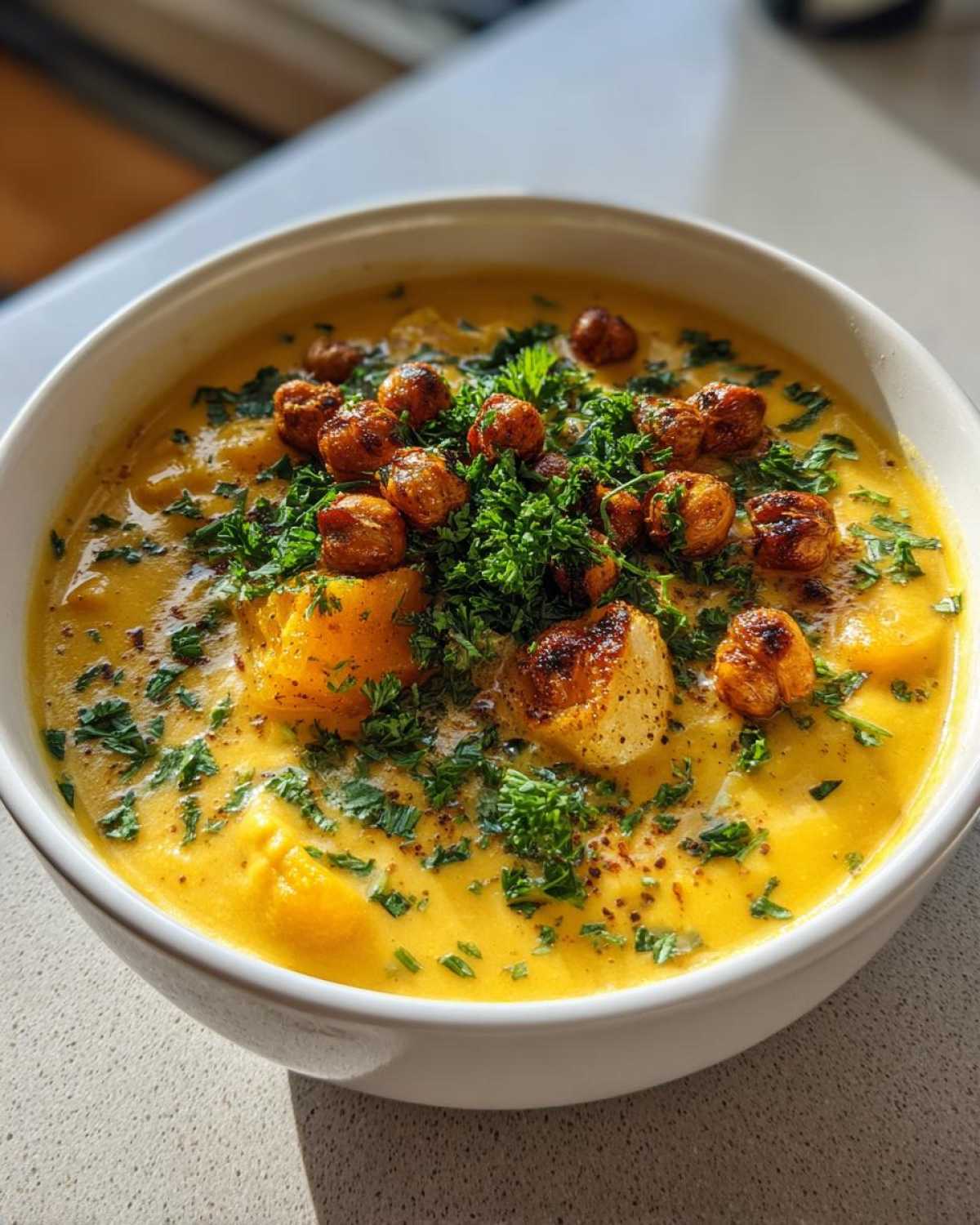
Flavor Building: Mastering Chickpea Potato Soup Journey Aromatics
When you are aiming for mastery, you can’t just dump spices in boiling water. Nope! We focus heavily on technique, especially in these first few steps, which is key to successful **flavor building for vegan soups**. The goal here is unlocking the flavor held inside those dried spices before the liquid even hits the pot.
After your onion, carrot, and celery have softened—you want them soft, not browned—that’s your cue! Add your minced garlic and all those dry spices: cumin, paprika, turmeric, and the cayenne if you’re brave. Stir that mixture constantly for just sixty seconds over the medium heat. You’ll smell an immediate difference; that pungent, raw smell vanishes, replaced by something warm and deep. This quick toasting in the oil—that’s called blooming—makes all the flavor compounds wake up and integrate beautifully into the base. For another example of how warming up simple ingredients yields huge results, take a peek at our roasted green bean recipe!
Troubleshooting Common Issues in Mastering Chickpea Potato Soup Journey
Listen, even on the best **Mastering Chickpea Potato Soup Journey**, things can go a little sideways, right? That’s totally normal! The point of this guide is to give you the answers quick so you don’t have to panic. If your soup isn’t coming out with that **perfect texture chickpea potato soup guide** promise, nine times out of ten, it’s an easy fix. Don’t sweat it—we all mess up the spicing sometimes!
The most common issue people run into is the consistency after they blend. Maybe you blended too much, or maybe the potatoes weren’t quite right. The good news is, these soups are really forgiving. We learned we need to season heavily at the end, but if you realize halfway through that the flavor is just flat, try blooming a *tiny* bit more smoked paprika in a teaspoon of hot oil and stirring that right in. It’s like getting a second hit of flavor!
Fixing Texture: Too Thin or Too Thick
If your soup turned out way too runny after you added the broth, don’t panic and dump in flour! Remember how we used starchy Yukon Golds? If they still aren’t breaking down enough, just take the lid off and let it simmer for another ten minutes to evaporate some water. If you blended too much and it’s now too thick—almost pasty—that’s easy! Just whisk in a splash more vegetable broth or even some plain water until you get that lovely, slightly thick but still soupy consistency we talked about.
Variations on Mastering Chickpea Potato Soup Journey
Once you nail the base technique, this soup becomes your creative playground! I love showing people how you can take these foundational steps and turn them into completely new **gourmet vegetarian soup recipes** without stressing out. The structure—aromatics, bloom, simmer, partial blend—stays the same, but the flavor accents can change everything.
For a totally different smoky profile, try swapping out the smoked paprika for a teaspoon of chipotle powder during the spice bloom. It brings a beautiful, lingering heat that pairs wonderfully with the earthiness of the chickpeas. If you want to sneak in some extra greens, the best time to add them is right at the very end, after you stir in the coconut milk.
Toss in a huge handful of fresh spinach or thinly sliced kale during those last two minutes of heating. The residual heat will wilt the spinach perfectly, or gently soften the kale, adding color and nutrients without making the soup taste ‘green.’ I often serve this with something bright on the side, like a tangy side salad—you can see one of my favorites here—to cut through all that savory richness!
Serving Suggestions for Your Hearty Chickpea and Potato Dinner
Once you’ve mastered the simmer and the texture, you deserve a proper presentation! This soup is so much more than just a quick meal; it’s a **hearty chickpea and potato dinner** that deserves to shine. The final step in making this feel gourmet—and I mean *really* gourmet—is the garnish. Don’t be tempted to skip the fresh parsley!
That tiny bit of green sprinkled on top right before serving does two things: it adds a necessary pop of color that the smoky brown soup needs, and that fresh burst of parsley flavor cuts through the richness of the coconut milk and potatoes perfectly. It’s the final seasoning, honestly.
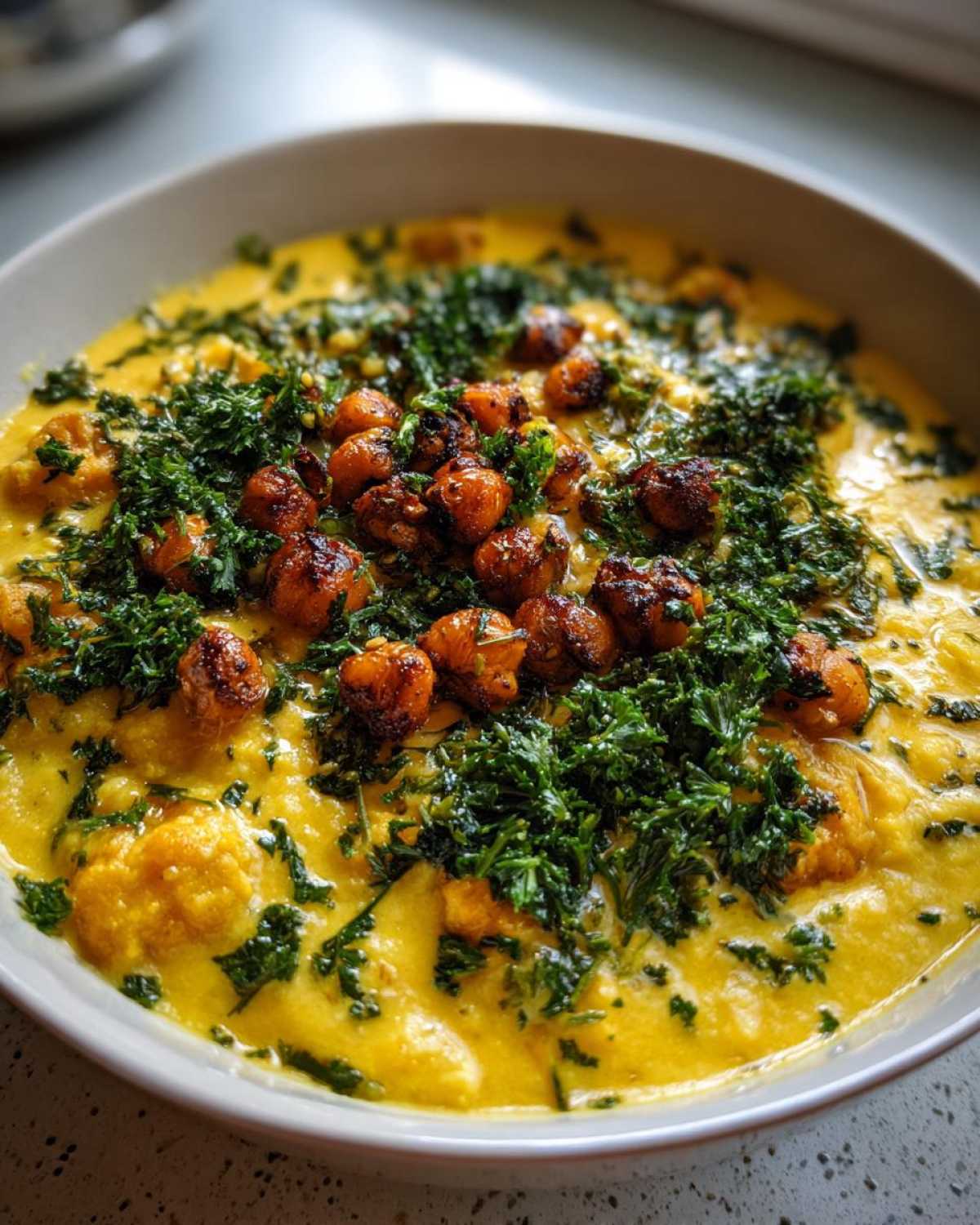
Now, for what to eat alongside it. Because this soup is so thick and satisfying, you want something structurally sound for dipping. Forget the flimsy crackers! You need crusty bread—a real hunk of sourdough or a sturdy baguette—to scoop up every last bit of that creamy base. If you want something even more decadent, I’ve got a recipe for amazing garlic parmesan breadsticks that disappear instantly when this soup is on the table.
If you’re looking for something lighter to serve on the side, aim for brightness. A simple side salad with a sharp vinaigrette works wonders to balance out all that savory goodness. But really, just make sure those roasted chickpeas are still crunchy on top, and you’re golden!
Storage and Reheating for Mastering Chickpea Potato Soup Journey
You’ve made it! You’ve achieved peak deliciousness, and you probably have leftovers because this recipe makes a big pot of absolute comfort. The great news about soups that rely on gentle simmering and partial blending, like ours, is that they keep beautifully. When storing your soup, always let it cool down completely on the counter before you slap a lid on it and stick it in the fridge. This is important for food safety, obviously.
It keeps really well in an airtight container for about four days in the refrigerator. I’ve found that the flavors actually marry even better on day two, which is always a nice surprise! It gets a touch thicker overnight because those potatoes absorb a little more liquid, but that’s nothing a tiny splash of water or broth can’t fix when you reheat it.
When it comes to reheating, the stovetop is your absolute best friend here. Heat it slowly over medium-low heat, stirring occasionally to make sure nothing sticks to the bottom. If you do reheat it on the stove, this is the perfect time to check your seasoning again. Sometimes salt levels settle differently after chilling, so taste BEFORE you serve!
If you are in a massive rush and have to use the microwave, that’s fine, but use short bursts—say, 60 seconds at a time—and stir well between each interval. Microwaving too fast can sometimes scramble the texture of blended starches, making it gummy, and we worked too hard on that perfect texture to ruin it now!
Ingredient Spotlight: Deep Dive into Flavor Enhancers
Part of **elevating pantry staple soups** is understanding *why* we choose the ingredients we do, not just listing them out. We’re taking humble things like canned goods and making them sing! Let’s look specifically at two superstars in this recipe: smoked paprika and coconut milk.
Smoked paprika is non-negotiable for me—it brings a deep, meaty, savory note where we can’t use actual meat. It’s pure magic for vegan cooking! Then there’s the coconut milk. It adds richness and body that water or thin broth simply can’t match. If you run out, I sometimes use soaked and blended cashews, which gives a really neutral creaminess. I’ve got a killer recipe for almost-crispy potato wedges using the air fryer you can check out right here for another take on sturdy starches!
These careful choices elevate the soup far beyond its simple origins.
Your Next Steps After Mastering Chickpea Potato Soup Journey
Wow, you made it through the entire recipe roadmap! Now that you’ve conquered the texture and flavor layers, I desperately want to know how it turned out for you. Did you nail that roasted chickpea crunch? Drop a comment below and tell me which variation you tried first!
If you loved this guide, please rate the recipe and feel free to reach out through my contact page with any lingering soup questions. Happy cooking!
PrintThe Ultimate Journey to Mastering Chickpea Potato Soup: Flavor Layers and Texture Control

Follow this detailed guide to move beyond a simple recipe and master the techniques needed to create an exceptional, deeply flavored Chickpea Potato Soup with perfect texture.
- Prep Time: 20 min
- Cook Time: 40 min
- Total Time: 60 min
- Yield: 6 servings
- Category: Dinner
- Method: Stovetop Simmering
- Cuisine: Global Comfort
- Diet: Vegan
Ingredients
- 1 tablespoon olive oil
- 1 large yellow onion, diced
- 2 carrots, peeled and diced
- 2 celery stalks, diced
- 4 cloves garlic, minced
- 1 teaspoon ground cumin
- 1 teaspoon smoked paprika
- 1/2 teaspoon turmeric powder
- 1/4 teaspoon cayenne pepper (optional)
- 1 pound Yukon Gold potatoes, peeled and cubed (1 inch pieces)
- 1 (15-ounce) can chickpeas, rinsed and drained (reserve 1/2 cup whole)
- 6 cups vegetable broth
- 1 (14.5-ounce) can diced tomatoes, undrained
- 1 bay leaf
- 1 teaspoon dried thyme
- 1/2 cup full-fat coconut milk (for creaminess)
- Salt and black pepper to taste
- 1/2 cup fresh parsley, chopped (for garnish)
Instructions
- Prepare the texture element: Toss the reserved 1/2 cup of whole chickpeas with 1 teaspoon of olive oil and a pinch of salt. Roast in an oven preheated to 400°F (200°C) for 12-15 minutes until slightly crisp. Set aside for garnish.
- Sauté aromatics: Heat 1 tablespoon of olive oil in a large pot or Dutch oven over medium heat. Add the onion, carrots, and celery. Cook until softened, about 7 minutes.
- Bloom the spices: Add the minced garlic, cumin, smoked paprika, turmeric, and cayenne pepper (if using). Cook for 1 minute, stirring constantly, until fragrant. This step builds deep flavor.
- Simmer the base: Add the cubed potatoes, the remaining drained chickpeas, vegetable broth, diced tomatoes, bay leaf, and thyme to the pot. Bring the mixture to a boil, then reduce heat to low, cover, and simmer for 15 minutes, or until the potatoes are fork-tender.
- Achieve creamy texture: Remove the bay leaf. Use an immersion blender to blend about one-third of the soup directly in the pot until smooth. This creates a creamy body without making the entire soup uniform.
- Finish and season: Stir in the coconut milk. Heat through gently for 2 minutes, but do not boil after adding coconut milk. Season generously with salt and black pepper to your preference.
- Serve: Ladle the soup into bowls. Top each serving with the roasted chickpeas prepared in step 1 and fresh parsley.
Notes
- For deeper potato flavor, use a mix of Yukon Gold and sweet potatoes.
- If you do not have coconut milk, use 1/4 cup of soaked and blended raw cashews for a neutral creamy finish.
- To intensify the smoky flavor, use fire-roasted diced tomatoes instead of plain diced tomatoes.
- If the soup is too thick after blending, add a splash more broth or water until the desired consistency is reached.
Nutrition
- Serving Size: 1.5 cups
- Calories: 310
- Sugar: 8
- Sodium: 450
- Fat: 9
- Saturated Fat: 3
- Unsaturated Fat: 6
- Trans Fat: 0
- Carbohydrates: 50
- Fiber: 12
- Protein: 11
- Cholesterol: 0