

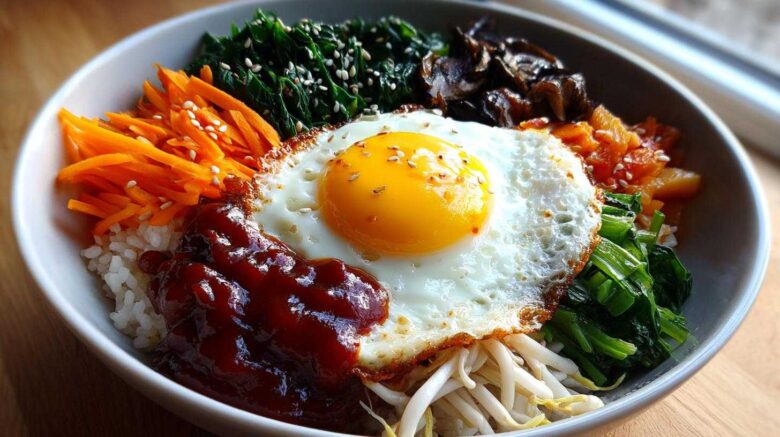
Welcome to Flavor Vista: Making the Best Korean Bibimbap Veggie Bowl
I’m Elias, and welcome to our kitchen corner!
Hannah and I love food that sings. This Korean Bibimbap Veggie Bowl is just that. It’s incredibly vibrant. You get so many fresh tastes here. We think healthy eating should never feel like a chore. This recipe proves it. It’s packed with goodness. No heading needs to be written for the introduction. Get ready for your new favorite Korean Bibimbap Veggie Bowl.
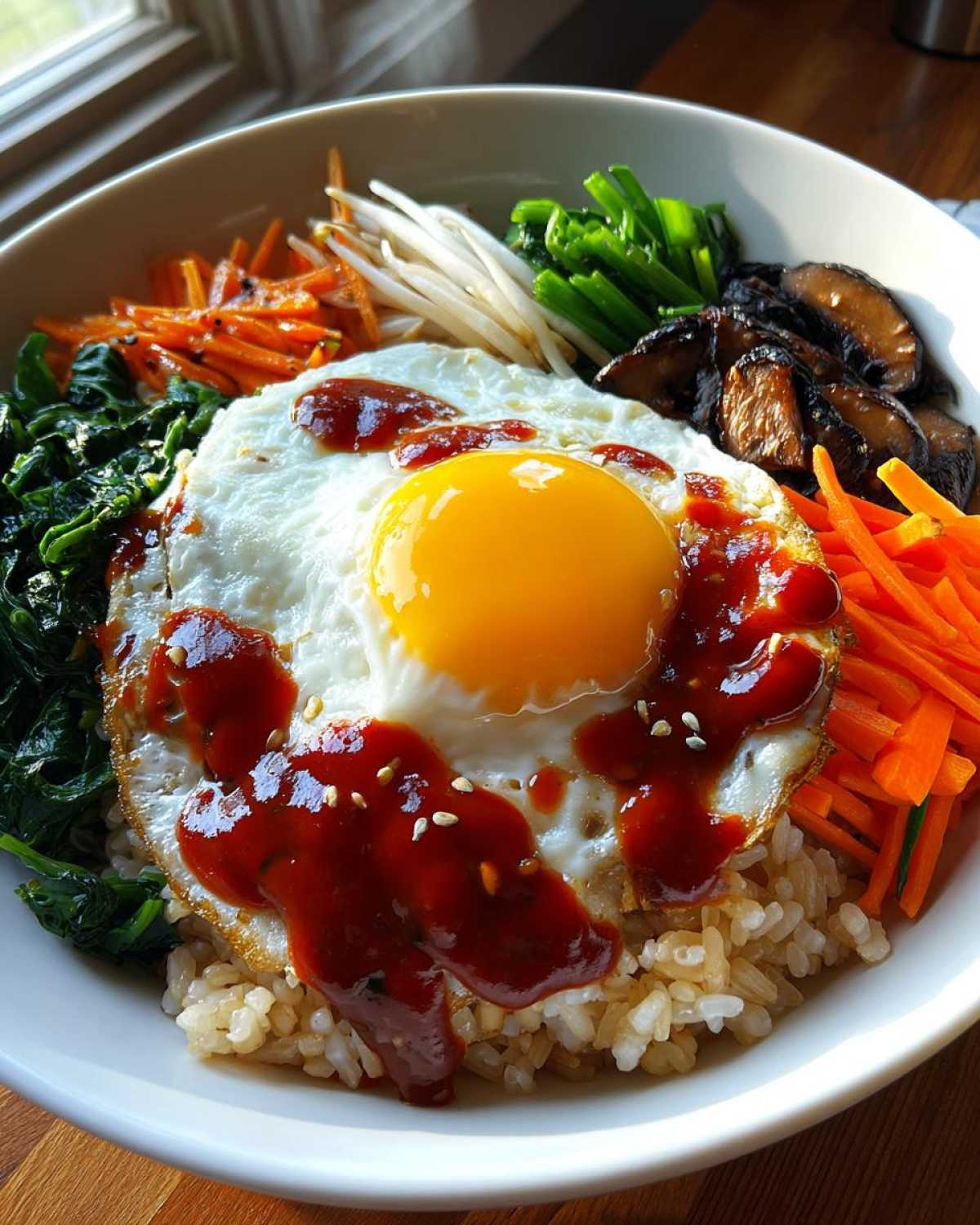
It’s so satisfying to eat.
Our Journey to the Perfect Korean Bibimbap Veggie Bowl
Hannah and I build our connection over food. We make simple meals together. This approach shines in this recipe. We focus on fresh, quality parts. That’s how we always cook. We want you to feel that calm, happy feeling. This bowl is approachable for everyone. It shows how great simple cooking is. We trust these methods completely.
Gather Your Ingredients for Korean Bibimbap Veggie Bowl
Alright, let’s move from the heart to the counter. Time to gather everything we need. Making a beautiful Korean Bibimbap Veggie Bowl starts here. I always lay my ingredients out first. This makes cooking so much smoother. Grab your apron, friends. Let’s see what we need to pull this off.
Rice and Core Vegetables
You need one cup of brown rice. Cook that with three cups of water. For vegetables, get one carrot, julienned finely. We need one cup of spinach. Blanch that spinach lightly. Also, blanch one cup of soybean sprouts. Slice a half cup of shiitake mushrooms very thin. Finally, julienne one medium zucchini.
Flavor Builders and Seasoning
These bits bring everything together. We need one tablespoon of sesame oil. A teaspoon of soy sauce adds depth. Don’t forget one clove of garlic, minced small. These seasonings coat our cooked veggies later.
Crafting the Spicy Korean Bibimbap Veggie Bowl Sauce
This sauce is the magic part. Whisk two tablespoons of gochujang. Add one tablespoon of honey or maple syrup. Next, measure one tablespoon of rice vinegar. Add one teaspoon of sesame oil and one teaspoon of water. Whisk it all until it is perfectly smooth. That texture matters a lot! This sauce is key to any great bowl.
Optional Toppings for Your Korean Bibimbap Veggie Bowl
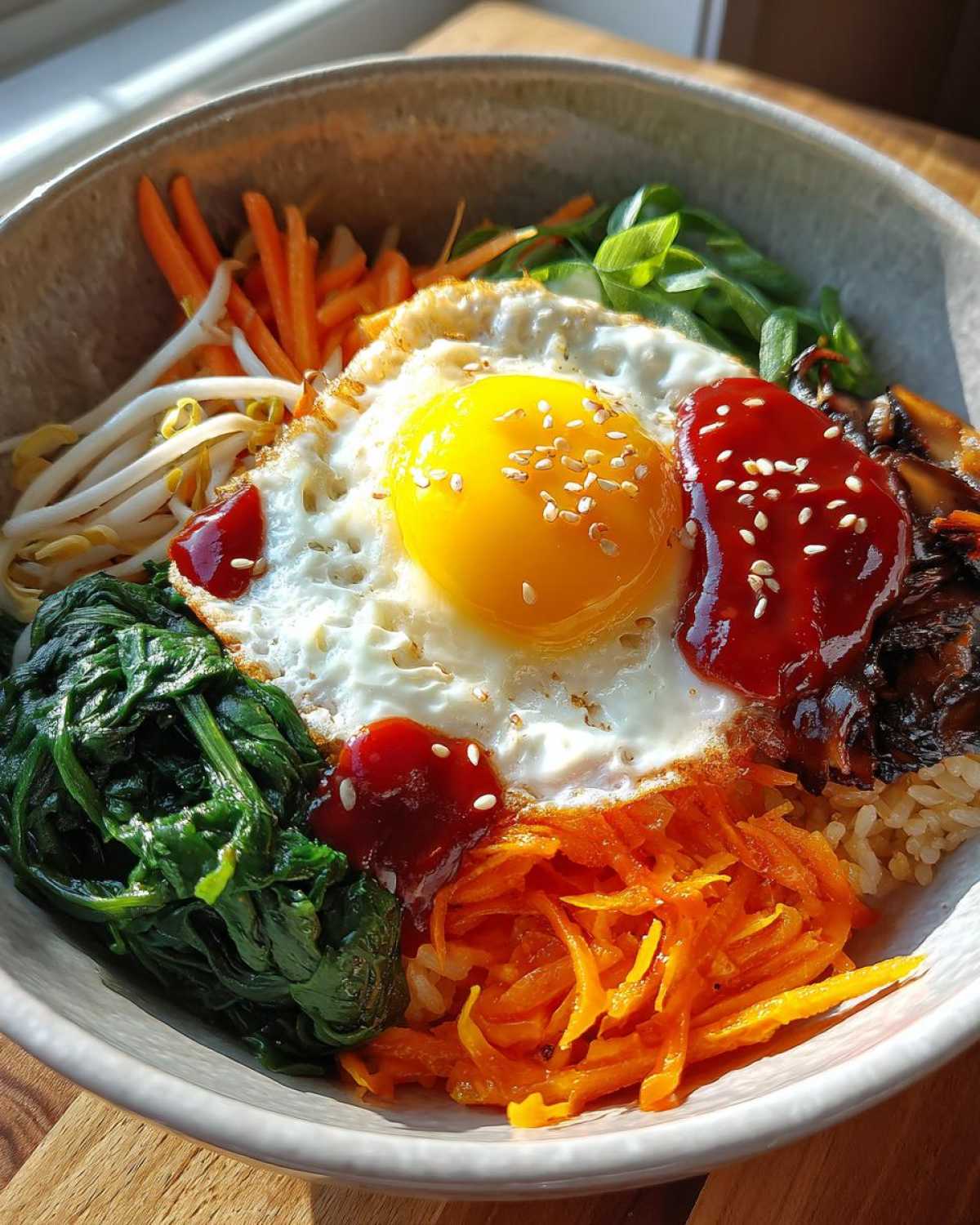
These additions make the bowl truly yours. A fried egg is classic. Toasted sesame seeds add a nice crunch. Feel free to skip the egg if you wish. It is still wonderful without it.
Step-by-Step Instructions for Korean Bibimbap Veggie Bowl
Now we put all those lovely parts together. Cooking is just assembly, really. We move fast here. Active cooking keeps the vegetables bright. This process creates our amazing Korean Bibimbap Veggie Bowl. Follow these steps closely for the best result.
Preparing the Foundation: Rice and Blanching
First, cook your brown rice completely. Use the water amount listed before. Set the warm rice aside for a moment. Next, blanch the spinach briefly. Do the same for the soybean sprouts separately. This step is key. Squeeze out every drop of extra water. Soggy veggies are a sad sight.
Sautéing the Vegetables
Grab your skillet now. Heat a little sesame oil in it. Sauté the julienned carrots. Cook them until they are tender-crisp. Remove the carrots right away. Now, cook the sliced mushrooms. Add a dash of soy sauce while they soften. Take them out and set them aside too.
Seasoning the Vegetable Mix
Time to bring flavor to our cooked vegetables. Place all the prepared veggies together. Toss them gently now. Use the small amount of sesame oil. Add the minced garlic to this mix. Make sure everything gets a light, fragrant coating. This step truly wakes up the vegetables.
Assembling Your Korean Bibimbap Veggie Bowl
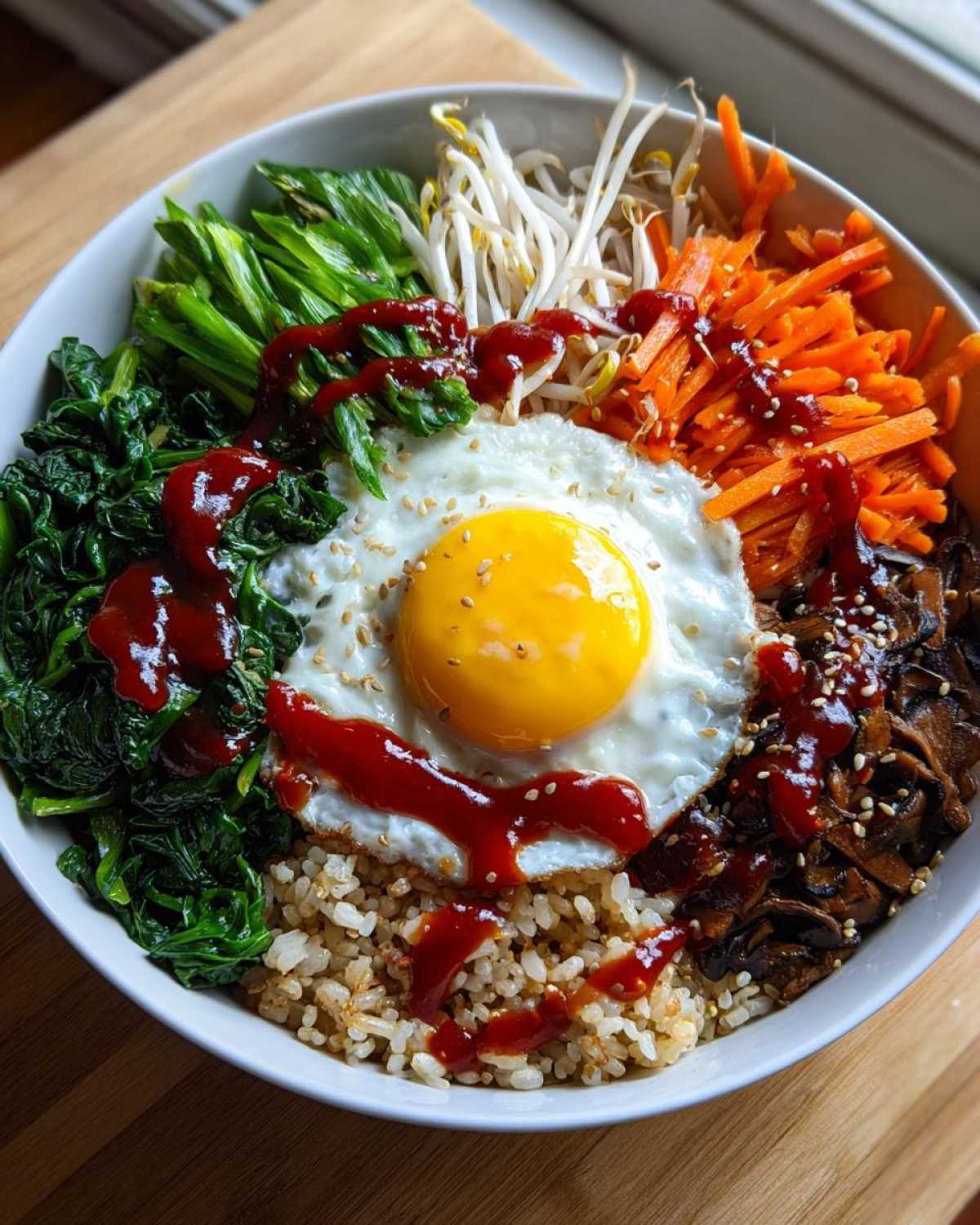
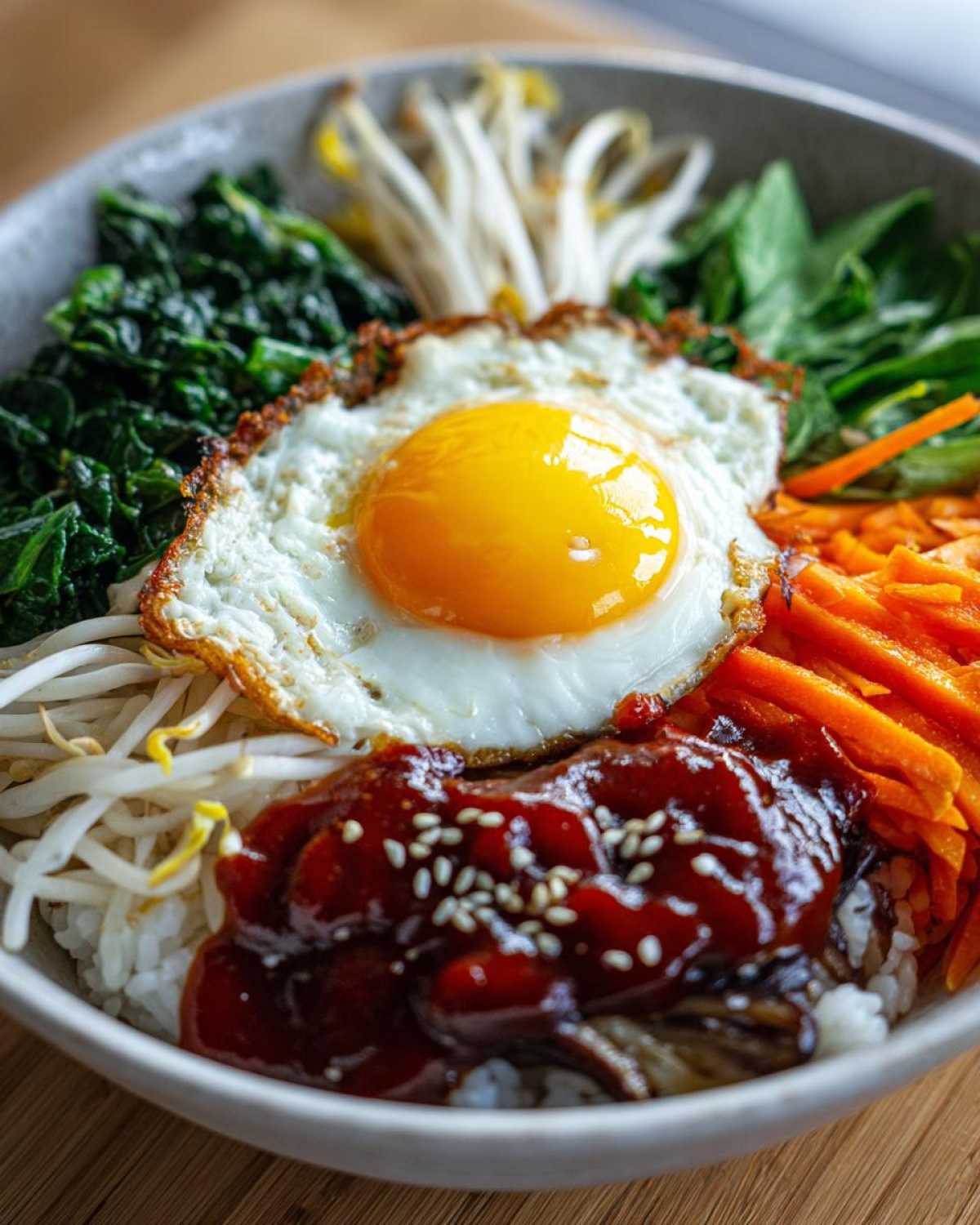
We build this bowl layer by layer. Start with a good serving of warm rice. Place it in the bottom of your serving bowl. Arrange all the seasoned vegetables neatly over the rice. They should look like a colorful crown. Top it with your chosen garnish now. Drizzle that spicy sauce on top last.
Tips for Success Making Your Korean Bibimbap Veggie Bowl
I’ve made this dish dozens of times now. I learned a few tricks along the way. These tips help make your Korean Bibimbap Veggie Bowl perfect. Remember, Hannah and I believe in flexibility in the kitchen. Trust your instincts with this recipe.
Vegetable Swaps and Flavor Adjustments
Don’t stress if you lack one specific veggie. Feel free to swap them out. Use what looks best at your market. Maybe try some thinly sliced bell peppers. If you want less heat, ease up on the gochujang. Start small with the chili paste in your sauce. You can always add more later. That’s a good rule for spice! Gochujang is a fermented chili paste known for its complex flavor profile.
Frequently Asked Questions About Your Healthy Rice Bowl
We get lots of questions about this dish. It’s such a versatile and healthy rice bowl. I’m happy to clear up a few things for you. Making great vegetarian Korean food should be easy.
Can I prepare the vegetables ahead of time for the Korean Bibimbap Veggie Bowl?
Yes, absolutely you can! That’s a great meal prep idea. Sauté and blanch the vegetables separately. Store them in airtight containers. Keep the rice separate too. Assemble everything right before you plan to eat it. This keeps textures fresh.
What if I don’t have gochujang for the spicy sauce?
That’s a common sticking point. Gochujang is unique, though. If you lack it, try mixing sriracha or sambal oelek. Blend that with a bit of sweet soy sauce. It won’t be exactly the same. But it gives a nice spicy kick to your healthy rice bowl.
Storing and Reheating Your Korean Bibimbap Veggie Bowl
Leftovers are a treat the next day! Store any extra rice separately. Keep the seasoned vegetables in another container. The sauce should always be stored alone. This separation is key for texture. Reheat the rice gently on the stovetop. Warm the veggies slightly. Then, reassemble and add fresh sauce. Enjoy your quick meal!
Estimated Nutrition for the Korean Bibimbap Veggie Bowl
I always look at the nutrition facts too. Knowing what’s in our food matters. This dish is veggie-packed, which is fantastic. Remember these numbers are just estimates. They are based on our recipe yield for two servings. They don’t include the optional fried egg.
For one bowl, expect about 400 calories. That’s a great number for dinner. The fat content is generally low to moderate. We get good fiber from the brown rice and veggies. Carbohydrates are high, as expected from the rice base.
- Calories: Approx. 400 per bowl
- Fat: Low to Moderate
- Protein: Moderate amount
- Carbohydrates: High content
- Sodium/Sugar: Moderate levels present
It’s a balanced plate we’ve created here. We made sure to use heart-healthy oils. This vegetarian Korean food keeps us feeling light and full.
Share Your Flavor Vista Creation
We truly hope you loved making this dish. Did you find your own flavor vista? Tell us how your Korean Bibimbap Veggie Bowl turned out. Rate this recipe for us. Check out more recipes on our blog.
We love hearing from you all!
Print1 Amazing Korean Bibimbap Veggie Bowl Secret
Create a vibrant and healthy Korean Bibimbap Veggie Bowl. This recipe is packed with fresh vegetables and topped with a delicious, slightly spicy sauce for a satisfying meal.
- Prep Time: 20 minutes
- Cook Time: 25 minutes
- Total Time: 45 minutes
- Yield: 2 servings
- Category: Main Dish
- Method: Stovetop Assembly
- Cuisine: Korean
- Diet: Vegetarian
Ingredients
- 1 cup short-grain brown rice
- 3 cups water
- 1 medium carrot, julienned
- 1 cup spinach, lightly blanched
- 1 cup soybean sprouts, blanched
- 1/2 cup shiitake mushrooms, thinly sliced
- 1/2 cup zucchini, julienned
- 1 tablespoon sesame oil
- 1 teaspoon soy sauce
- 1 clove garlic, minced
- For the Sauce: 2 tablespoons gochujang (Korean chili paste)
- 1 tablespoon honey or maple syrup
- 1 tablespoon rice vinegar
- 1 teaspoon sesame oil
- 1 teaspoon water
- Optional Garnish: Fried egg, toasted sesame seeds
Instructions
- Cook the brown rice with water according to package directions. Set aside.
- In a skillet, heat a little sesame oil. Sauté the carrots until tender-crisp. Remove and set aside.
- In the same skillet, sauté the mushrooms with a dash of soy sauce until soft. Remove and set aside.
- Quickly blanch the spinach and soybean sprouts separately. Squeeze excess water out.
- Toss the blanched vegetables and sautéed items with a tiny bit of sesame oil and minced garlic for seasoning.
- Prepare the sauce by whisking together gochujang, honey, rice vinegar, sesame oil, and water until smooth.
- To assemble, place a serving of warm rice in the bottom of a large bowl.
- Arrange the prepared vegetables neatly over the rice.
- Top with an optional fried egg or sprinkle with sesame seeds.
- Drizzle your homemade spicy sauce over the bowl just before serving.
Notes
- Feel free to substitute vegetables based on what is fresh at your market.
- For extra flavor, marinate the mushrooms briefly in soy sauce before sautéing.
- If you prefer less spice, start with less gochujang in the sauce.
Nutrition
- Serving Size: 1 bowl
- Calories: Approx. 400
- Sugar: Moderate
- Sodium: Moderate
- Fat: Low to Moderate
- Saturated Fat: Low
- Unsaturated Fat: Present
- Trans Fat: None
- Carbohydrates: High
- Fiber: Good Source
- Protein: Moderate
- Cholesterol: Depends on egg use