

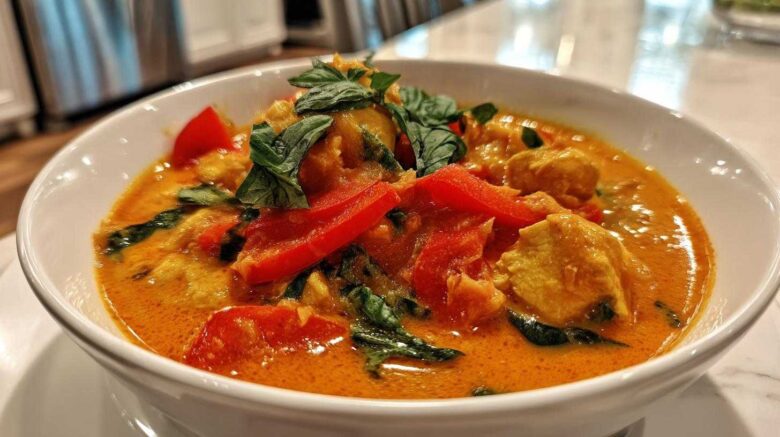
Discover the Secrets to the Best Thai Coconut Chicken Curry
Welcome! Hannah and I are thrilled you’re here.
We spent years chasing that perfect bowl. You know the one. That rich, creamy Thai Coconut Chicken Curry from your favorite spot.
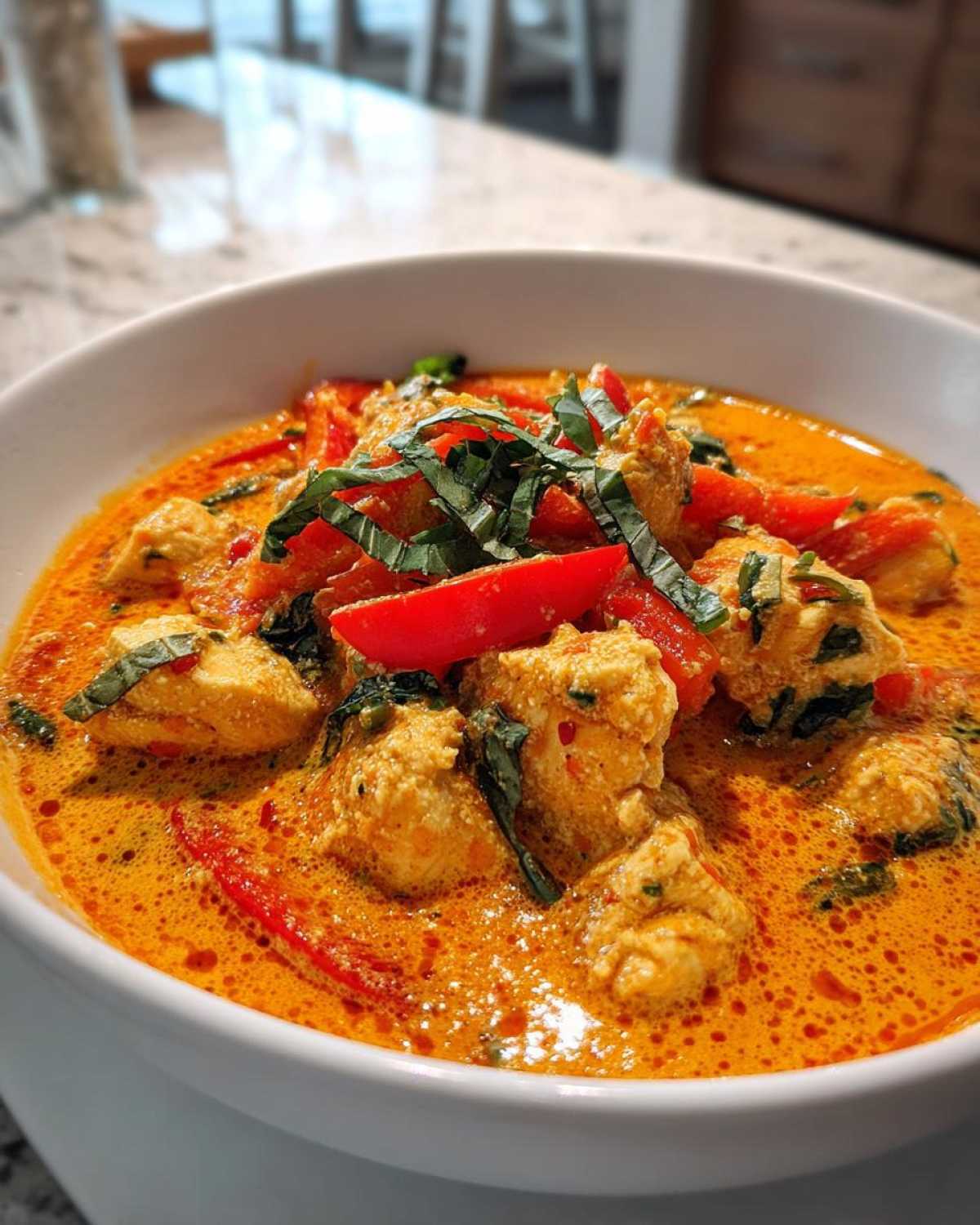
Honestly, making it at home felt impossible at first. We thought it required secret restaurant techniques.
But after many kitchen experiments, we cracked the code.
This recipe brings that amazing, balanced flavor right to your table.
It’s comforting, aromatic, and surprisingly easy for a weeknight meal.
Get ready for truly restaurant-quality results tonight.
Gather Your Ingredients for Authentic Thai Coconut Chicken Curry
To nail this incredible Thai Coconut Chicken Curry, ingredient quality really matters.
It’s not about fancy equipment. It’s about using the right foundation.
I always tell folks, don’t skimp on the coconut milk here.
We need that richness for that luxurious mouthfeel.
Essential Components of Your Thai Coconut Chicken Curry
- 1 tablespoon coconut oil: For starting the sauté.
- 1 pound boneless, skinless chicken breasts, cut into bite-sized pieces: Thighs work great too, for a richer taste.
- 3 tablespoons Thai red curry paste: This is your heat and depth source. Adjust this amount later!
- 1 (13.5 ounce) can full-fat coconut milk: Please grab full-fat. Light versions just won’t give you that creamy curry texture we crave.
- 1/2 cup chicken broth: Helps thin the sauce just right.
Flavor Enhancers and Fresh Finishes
These next items bring the bright, aromatic notes.
- 1 onion, chopped: Cook this until it’s nice and soft.
- 2 cloves garlic, minced: Garlic needs just a quick minute to bloom its flavor.
- 1 tablespoon minced ginger: Fresh ginger makes all the difference here, trust me.
- 1 tablespoon fish sauce: Adds crucial salty depth, a Thai secret weapon.
- 1 teaspoon brown sugar: Balances the spice perfectly.
- 1 red bell pepper, sliced: Adds color and a little crunch.
- 1/2 cup fresh basil leaves: Stir these in right at the end for freshness.
- Juice of 1/2 lime: That final pop of acidity brightens everything up.
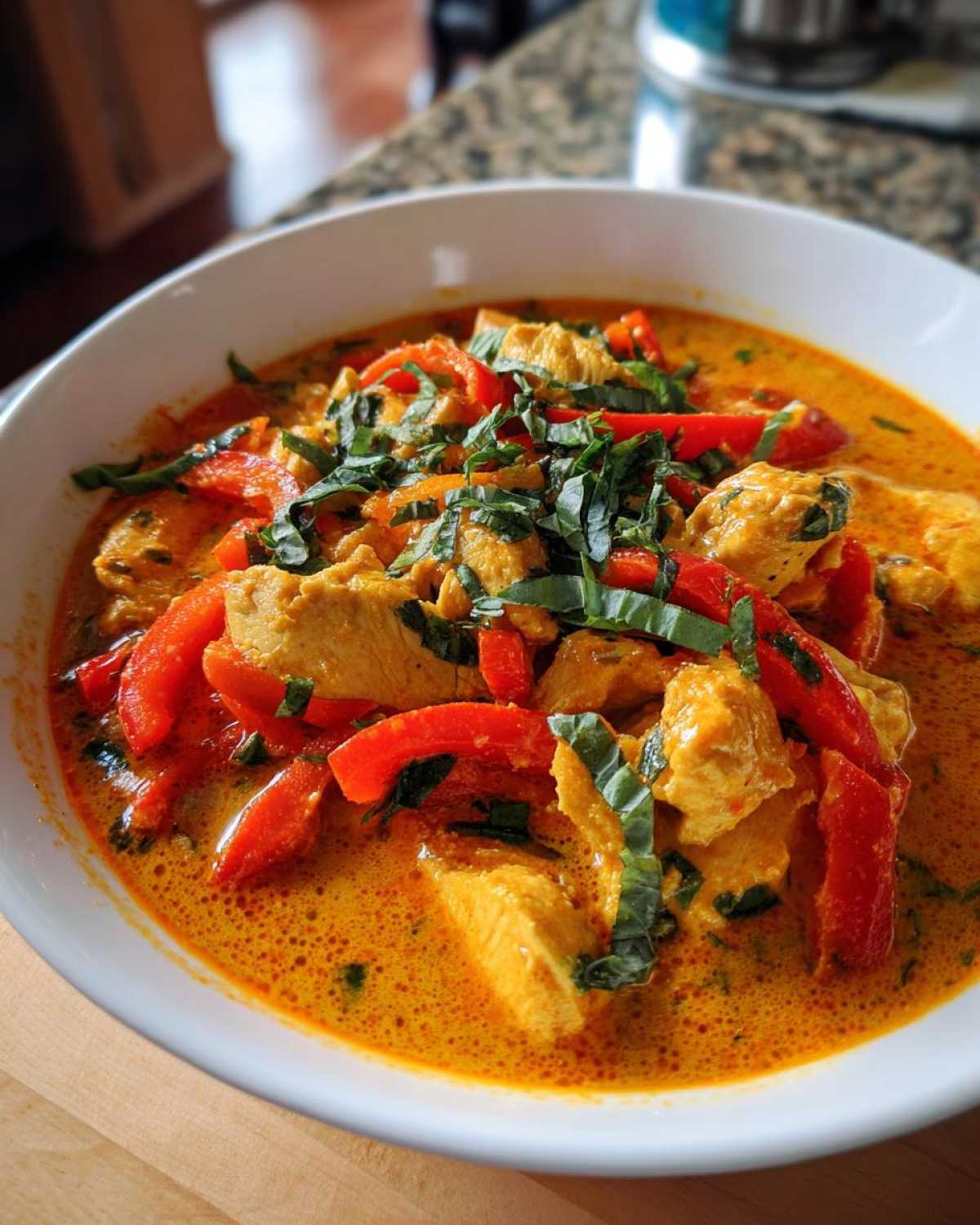
Preparing Your Stovetop Thai Coconut Chicken Curry
Now that we have all our gorgeous ingredients ready, let’s talk cooking.
You need a good, heavy-bottomed pot or Dutch oven for this.
The even heat helps prevent scorching the coconut milk later on.
We start by giving our chicken a quick sear.
This step locks in some great juices and color.
Remember to brown the chicken lightly, then pull it out promptly.
Building the Aromatic Base for Thai Coconut Chicken Curry
This next part is where the magic truly happens.
After the chicken is resting, soften your chopped onion first.
Once the onion is translucent, toss in the ginger and garlic.
Cook them briefly until you can really smell that wonderful fragrance.
Then, add your red curry paste to the hot oil.
Stir constantly for about two minutes while it toasts.
Toasting the paste wakes up all those spices deeply.
It’s a simple technique, but it makes the whole curry sing.
Simmering to Perfection in Your Thai Coconut Chicken Curry
Once the paste is toasted, pour in the liquids slowly.
Whisk in the coconut milk and the chicken broth together well.
Get this mixture just to a gentle, slow simmer.
Stir in your fish sauce and that touch of brown sugar now.
Return the partially cooked chicken pieces to the pot.
Let everything bubble gently for about ten minutes.
This simmering time finishes cooking the chicken through nicely.
Keep an eye on it so it doesn’t boil too hard.
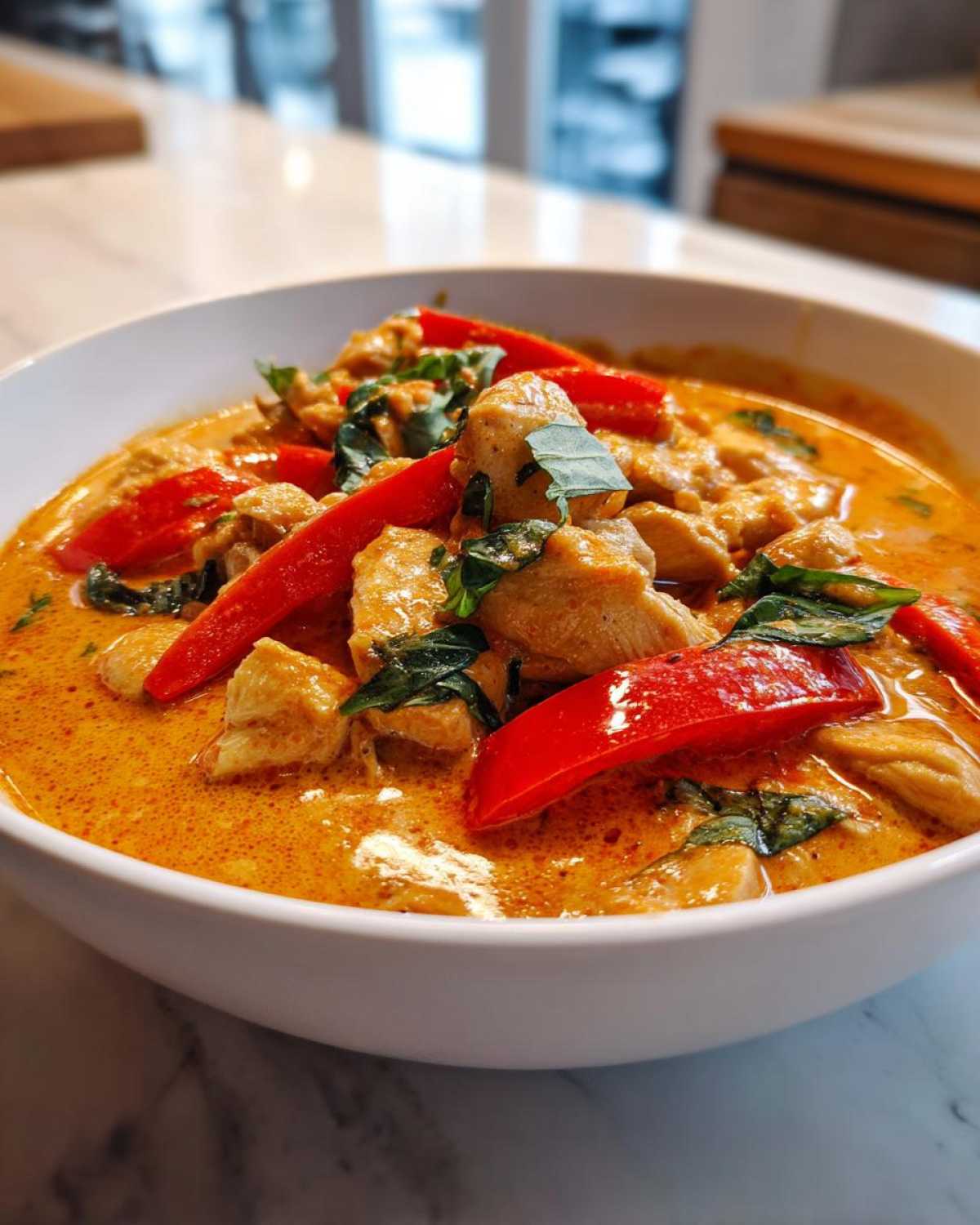
Equipment Needed for Perfect Thai Coconut Chicken Curry
Before we get too deep into the cooking, let’s talk tools.
Having the right gear makes the whole process feel calmer.
You don’t need a whole professional kitchen setup, though.
Just a few basics really help this stovetop recipe shine.
I find preparation starts before the heat even goes on.
Here are the simple items Elias and I always grab first:
- A large pot or Dutch oven: Medium heat needs a good base.
- Sharp chef’s knife: Accuracy matters for even cooking pieces.
- Sturdy cutting board: Keep this clean for all your chopping needs.
- Measuring cups and spoons: Precision helps manage spice levels easily.
- Wooden spoon or spatula: Good for stirring solids and pastes.
Using that heavy pot helps maintain a steady temperature.
It prevents hot spots when that rich coconut milk is in there.
This simple setup gets us restaurant-quality results every time.
It’s all about preparation, really.
Tips for Achieving Restaurant-Quality Thai Coconut Chicken Curry
We learned a few tricks over the years.
These small adjustments make a huge difference in flavor.
They take this from good home cooking to something special.
Elias always reminds me about tasting as we go.
That’s the key to matching any great restaurant dish.
Don’t just follow the measurements blindly.
Adjusting Spice and Sweetness in Your Thai Coconut Chicken Curry
The final taste test is non-negotiable for a great Thai Coconut Chicken Curry.
Before you take the pot off the heat, give it a good stir and a small taste.
Does it feel flat? Add a tiny splash more fish sauce for saltiness.
Is it too sharp or spicy for your liking?
A small pinch of brown sugar will smooth out that edge beautifully.
Those two ingredients are your final balancing act.
Ingredient Swaps and Additions for Your Thai Coconut Chicken Curry
Feel free to make this recipe your own, too.
If you prefer a richer, more fall-apart texture, swap the breasts for chicken thighs.
Hannah often does this for leftovers; they stay so moist!
We also love adding more texture during the simmer stage.
Sliced bamboo shoots are fantastic here.
Snap peas work well if you want more green crunch.
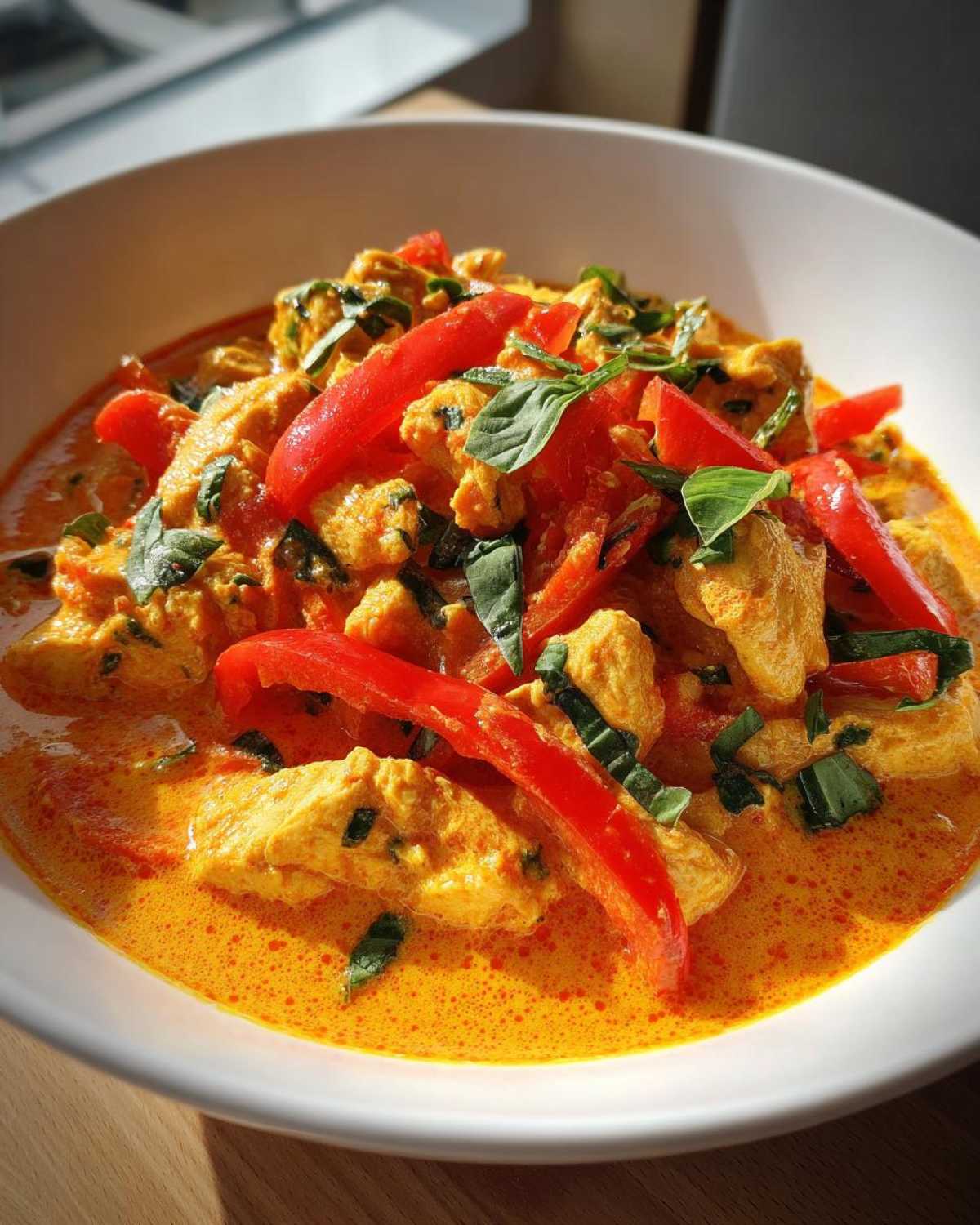
Frequently Asked Questions About Thai Coconut Chicken Curry
We get so many great questions after sharing this recipe.
It shows how much you all love making this dish.
Here are a few things we hear often about technique.
Hopefully, these clear up any last cooking doubts.
Can I use light coconut milk in this Thai Coconut Chicken Curry?
I strongly advise against using light coconut milk here.
Light versions lack the necessary fat content.
That fat is what creates that signature, luxurious creamy curry texture.
Using light milk will result in a watery sauce instead.
It just won’t coat the chicken right.
Stick to full-fat for the best results, truly.
How do I control the heat level of my Thai Coconut Chicken Curry?
Controlling the spice is simple with red curry paste.
The recipe calls for three tablespoons as a starting point.
This gives a nice medium warmth for us.
If you prefer less fire, start with just two tablespoons.
You can always add more paste in Step 5 while toasting.
Just do not add too much red curry paste at once.
Storing and Reheating Your Delicious Thai Coconut Chicken Curry
Leftovers are sometimes even better the next day!
This creamy curry stores beautifully in the fridge.
Place any remaining curry in an airtight container.
It keeps well for up to three or four days easily.
When you are ready to eat it again, reheat it gently.
Use low to medium heat on the stovetop.
Stir often as it warms up slowly.
Avoid microwaving if you can, it can sometimes separate the sauce.
If the curry seems too thick when reheating, add a splash of water or broth.
This splash brings back that perfect consistency right away.
Serving Suggestions for Your Thai Coconut Chicken Curry
You’ve made the star of the show!
Now, let’s talk about what goes best alongside it.
A great dish deserves the perfect supporting cast.
We always serve this Thai Coconut Chicken Curry hot.
It begs for something simple to soak up that amazing sauce.
Here are our go-to accompaniments:
- Steamed Jasmine Rice: This is the classic choice, hands down.
- Brown Rice: A nuttier, slightly healthier option works too.
- Simple Green Salad: Dress a crisp salad with a light vinaigrette.
- Fresh Cilantro: Sprinkle extra on top for color and fresh taste.
The rice is essential for soaking up every last drop.
That creamy curry flavor needs a neutral base.
Don’t forget that final garnish of fresh basil and lime!
It really makes the presentation pop.
Understanding the Nutrition in Your Thai Coconut Chicken Curry
We love making food from scratch here.
Knowing what goes into your body feels important to us.
When we cook at home, we control every single ingredient.
That is a huge benefit of making this Thai Coconut Chicken Curry yourself.
However, I have to be upfront about the numbers.
Because we use various brands of curry paste and coconut milk, precise tracking is tough.
The exact fat and calorie counts shift based on those choices.
We haven’t sent this recipe to a lab for exact analysis.
So, please view any figures you look up as rough guides only.
This information is not a substitute for professional dietary advice. It varies based on serving size and specific brand purchases.
Just remember, using full-fat coconut milk does raise the fat content.
But that fat is what gives you that wonderful texture!
Share Your Experience Making Thai Coconut Chicken Curry
We genuinely hope you loved making this dish.
Seeing your creations brings us so much joy.
We built Flavor Vista for connection.
Tell us how your Thai Coconut Chicken Curry turned out!
Did you adjust the spice level?
Did the creamy curry meet your expectations?
Please drop a comment below right now.
We read every single one of your messages.
Share your cooking triumphs or any funny kitchen mishaps.
Your feedback helps us all learn more.
Rate this recipe using those little stars if you can.
It helps other home cooks find great meals.
If you snap a picture, tag us on social media.
We love seeing that beautiful red curry paste shine.
Happy cooking from Elias and Hannah to you!
PrintAmazing 10 Thai Coconut Chicken Curry Secrets

Create a rich and creamy Thai Coconut Chicken Curry that tastes just like your favorite restaurant version. This recipe balances sweet coconut milk with aromatic spices for a comforting meal.
- Prep Time: 15 minutes
- Cook Time: 30 minutes
- Total Time: 45 minutes
- Yield: 4 servings
- Category: Main Course
- Method: Stovetop
- Cuisine: Thai
- Diet: Gluten Free
Ingredients
- 1 tablespoon coconut oil
- 1 pound boneless, skinless chicken breasts, cut into bite-sized pieces
- 1 onion, chopped
- 2 cloves garlic, minced
- 1 tablespoon minced ginger
- 3 tablespoons Thai red curry paste (adjust to your spice preference)
- 1 (13.5 ounce) can full-fat coconut milk
- 1/2 cup chicken broth
- 1 tablespoon fish sauce
- 1 teaspoon brown sugar
- 1 red bell pepper, sliced
- 1/2 cup fresh basil leaves
- Juice of 1/2 lime
Instructions
- Heat the coconut oil in a large pot or Dutch oven over medium heat.
- Add the chicken and cook until lightly browned on all sides. Remove the chicken and set it aside.
- Add the onion to the pot and cook until softened, about 5 minutes.
- Stir in the garlic and ginger and cook for 1 minute until fragrant.
- Add the red curry paste and cook for 2 minutes, stirring constantly, to toast the spices.
- Pour in the coconut milk and chicken broth. Stir well to combine with the curry paste.
- Bring the mixture to a gentle simmer. Stir in the fish sauce and brown sugar.
- Return the cooked chicken to the pot. Simmer for 10 minutes, or until the chicken is cooked through.
- Add the sliced red bell pepper and cook for another 3-5 minutes until tender-crisp.
- Remove the pot from the heat. Stir in the fresh basil leaves and the lime juice.
- Serve immediately over steamed jasmine rice.
Notes
- You can substitute chicken thighs for breasts if you prefer a richer flavor.
- Taste the curry before serving and add more fish sauce for saltiness or more sugar for sweetness as needed.
- For extra vegetables, add sliced bamboo shoots or snap peas during step 8.
Nutrition
- Serving Size: 1 serving (without rice)
- Calories: Unknown
- Sugar: Unknown
- Sodium: Unknown
- Fat: Unknown
- Saturated Fat: Unknown
- Unsaturated Fat: Unknown
- Trans Fat: Unknown
- Carbohydrates: Unknown
- Fiber: Unknown
- Protein: Unknown
- Cholesterol: Unknown