

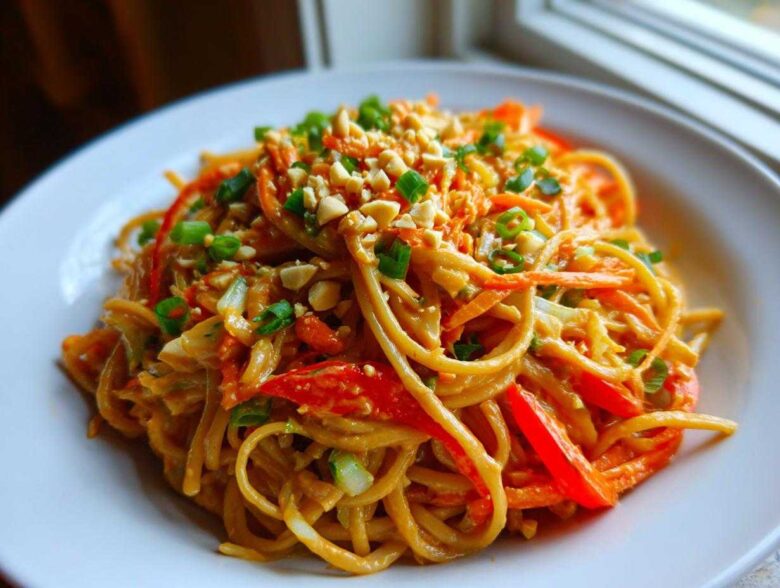
You know what the biggest problem is with most noodle dishes? They get mushy! You have the soft noodles, creamy sauce, and then suddenly, everything just melts into one texture. No thank you! I spent weeks tinkering in the kitchen because I needed that *snap*. That clean, loud crunch that makes every bite exciting. Trust me, when you nail that contrast, you’ve hit gold. This recipe for Thai Peanut Noodles with Crunchy Veggies is that perfect marriage of silky, savory sauce and vegetables that refuse to give up their crispness. Seriously, getting the sauce just right—that sticky, tangy-sweet coating—was half the battle. But once you taste it, you’ll see why it was worth every single whisk!
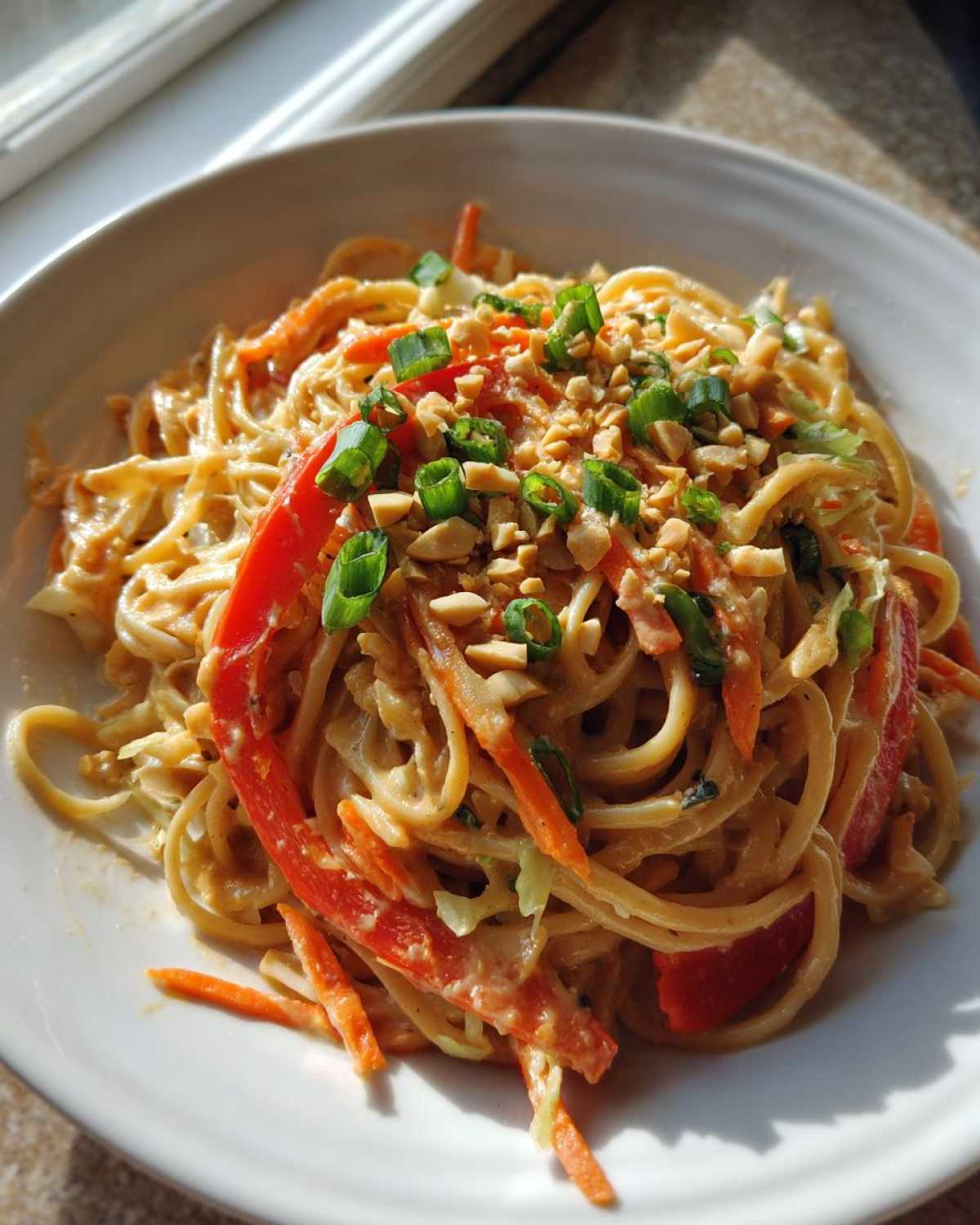
Why This Recipe for Thai Peanut Noodles with Crunchy Veggies Stands Out
Okay, so what makes this dish better than grabbing takeout? Simple: Texture and speed. It comes together faster than delivery—seriously, we’re talking under 30 minutes if you’re organized. I’ve made sure this recipe delivers exactly what you’re looking for.
- It’s lightning fast—perfect for a busy night.
- The sauce hits all four main flavor notes: sweet, salty, tangy, and spicy.
- Maximum crunch guaranteed thanks to how we treat the vegetables.
For more of my quick supper ideas, check out the blog archives!
Perfect Creamy Peanut Sauce for Thai Peanut Noodles
This sauce is the heart of the dish, and it has to be balanced out just right. You need that richness from the peanut butter, but it can’t be too thick, right? That’s where the hot water comes in—it thins the sauce just enough to cling perfectly to every noodle strand without weighing it down.
We’re aiming for a mix where the sweetness from the maple syrup plays against the rice vinegar’s sharp tang, with just a little kick of heat from the Sriracha. If you want to master the sauce on its own for dipping things like spring rolls, I have a great standalone guide for a simple peanut sauce for dipping and tossing.
Achieving Ultimate Crunch in Your Thai Peanut Noodles with Crunchy Veggies
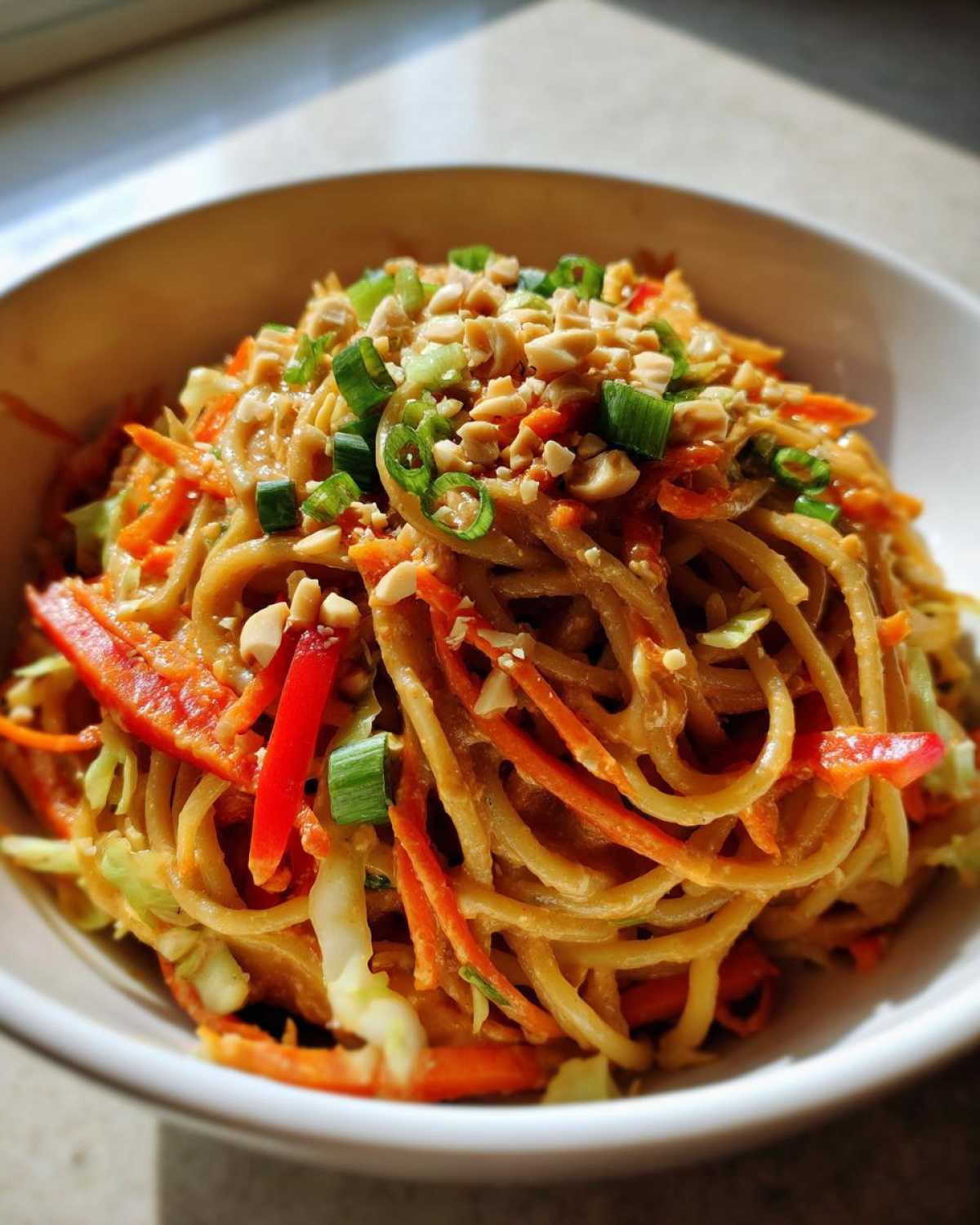
This is non-negotiable for me! We use carrots for sweetness and bite, vibrant red bell peppers, hearty shredded red cabbage, and—my favorite—fresh bean sprouts at the very end. The trick? They go in last, and you toss minimally. We want them to stay raw-crisp, not wilted.
Keeping them raw maximizes that contrast against the creamy peanut coating. If you love that snappy texture, you might enjoy my recipe for a crunchy cabbage vinaigrette, too. The principles of keeping vegetables crisp are similar; think cabbage salad with an easy crunchy vinaigrette!
Gathering Ingredients for Thai Peanut Noodles with Crunchy Veggies
Alright, let’s get organized! Because this dish comes together so fast, having everything measured out before you even boil the water is essential. If you’re anything like me, you don’t want a frantic search for ginger when the noodles are practically done. Having everything prepped means we can mix the sauce while the noodles are soaking up that cold water!
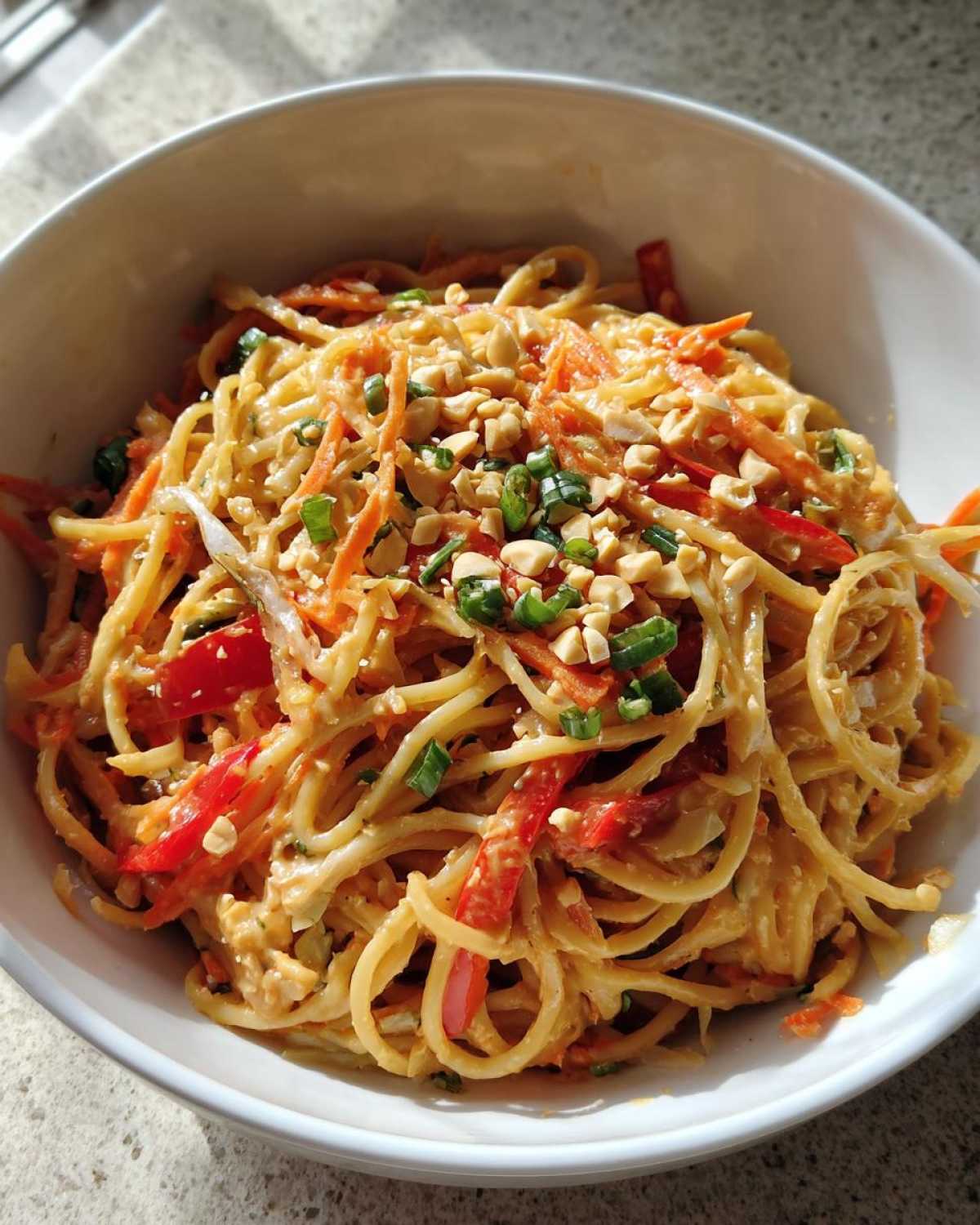
Here is what you need to pull this together. Notice how those vegetables are prepped—no big chunks here, we want thin, light pieces that mix evenly.
- 12 oz spaghetti or linguine noodles (Rice noodles work great here too!)
- 1 cup creamy peanut butter (make sure it’s unsweetened if you can!)
- 1/4 cup soy sauce or tamari
- 3 tablespoons rice vinegar
- 2 tablespoons maple syrup or honey
- 1 tablespoon toasted sesame oil
- 1 tablespoon fresh ginger, grated
- 2 cloves garlic, minced
- 1 teaspoon sriracha or chili garlic sauce (I usually go heavy on this one!)
- 1/4 cup hot water (or more, for thinning later)
- 1 large carrot, julienned
- 1 red bell pepper, thinly sliced
- 1 cup shredded red cabbage
- 1 cup bean sprouts
- 1/2 cup chopped scallions, for garnish
- 2 tablespoons chopped peanuts, for garnish
If you’re looking for ways to incorporate nutty flavors throughout your cooking, knowing how to properly use sesame oil is key. Check out my collection of Asian noodle recipes with sesame oil for more inspiration!
Expert Steps: How to Prepare Thai Peanut Noodles with Crunchy Veggies
Now for the fun part—putting it all together! Since we’re aiming for that super creamy peanut sauce pasta feel without sacrificing the crisp factor, timing is everything. Don’t start slicing your peppers until the water is boiling, okay? Keep your focus sharp, and you can have this done before your favorite show comes on!
For the full, printable experience, you can always snag the easy Thai peanut noodles recipe card here.
Cooking Noodles and Preparing the Sauce Base
First things first: boil those noodles until they are just al dente—not too soft! The second they are done, drain them, and this is the most important thing you’ll do all day: rinse them immediately under cold water. I mean icy cold! This stops the cooking dead, washes off that sticky starch so the sauce glides on later, and helps keep them ready for a cold noodle salad later.
While those are chilling out, whisk up your sauce. Use a good bowl, because you’ll be whisking hard! Everything goes in—peanut butter, soy sauce, ginger—and then slowly, slowly drizzle in that hot water. You’re not supposed to dump it; you’re adding it until that thick glob transforms into a glossy, smooth coating. If you need it thinner, add more water, a teaspoon at a time. That perfect consistency is what makes it the best savory peanut dressing for noodles.
Combining the Noodles, Sauce, and Fresh Vegetables for Thai Peanut Noodles
Once the noodles are cool enough to handle, pour that beautiful peanut sauce over them and toss gently until every single strand looks coated. Now, you taste! Does it need more zing? Add a splash of vinegar. More sweet? A little maple syrup. Once you are happy with the sauce base, it’s time for crunch.
Add all your gorgeous, pre-cut veggies—the carrots, peppers, cabbage, and sprouts. Here’s the rule: toss these really, really gently. You are just trying to distribute them, not massage them into mush! We want those gorgeous fresh vegetable noodle toppings to snap when you bite down. Toss just enough to coat them lightly, then move straight to serving!
Ingredient Notes and Substitutions for Your Thai Peanut Noodles
Look, nobody’s kitchen is identical to mine, and that’s fine! We need backups and dietary workarounds, right? If you need this to be a gluten free peanut noodles recipe, swapping in rice noodles is a breeze. Just use the same amount of time you would for spaghetti, but cook them separately!
Also, if you’re keeping it vegan, make absolutely sure you’re using maple syrup—honey is out. The earthiness of maple works just as wonderfully here, trust me. And here’s a little insider tip for flavor depth: add about a tablespoon of fresh lime juice to that peanut sauce when you’re tasting it. It really brightens up all those savory Asian noodle recipes with sesame oil notes!
Tips for Success Making the Best Thai Peanut Noodles with Crunchy Veggies
Even though this is a super quick dish, having a few tricks up your sleeve makes it truly repeatable—you want it to taste amazing every single time you make it. My favorite thing to do is double the sauce recipe because I always end up sneaking some while I’m cooking!
Speaking of making ahead, if you plan on using these for your weekly lunches, you need a strategy for storage. For the crispiest vegetables, you absolutely must keep the wet and dry ingredients separate. I always pack the peanut-coated noodles and the crunchies (cabbage, sprouts, peppers) into separate containers from any extra dressing or garnishes. When lunchtime rolls around, just toss them together. This method is how I keep those veggies loud and proud, even on day three!
If you’re trying to capture those really authentic thai flavors noodle dish vibes, it all comes down to that acid balance, like I mentioned before. Don’t be shy with the vinegar, but if you want that bright, sunny taste that screams ‘fresh,’ use lime juice instead of or alongside the rice vinegar. It really cuts through the richness of the peanut butter perfectly. For all my best storage hacks, check out my guide on make ahead peanut noodles storage!
Serving Suggestions for Your Quick Weeknight Asian Noodle Dish
Okay, so you’ve made this absolute masterpiece! Now, how should you enjoy it? Honestly, I love this dish best when it’s just slightly cooled—not piping hot, but certainly not rock solid from the fridge. Serving these at room temperature really lets the savory peanut flavor come through without being dulled by the cold.
If you’re serving it right away as a speedy supper, make sure you save back some of those garnishes! The chopped scallions really add a fresh oniony lift, and the extra chopped peanuts echo the creaminess of the sauce while providing one final layer of crunch. Don’t skip those two—they are the finishing sparkle!
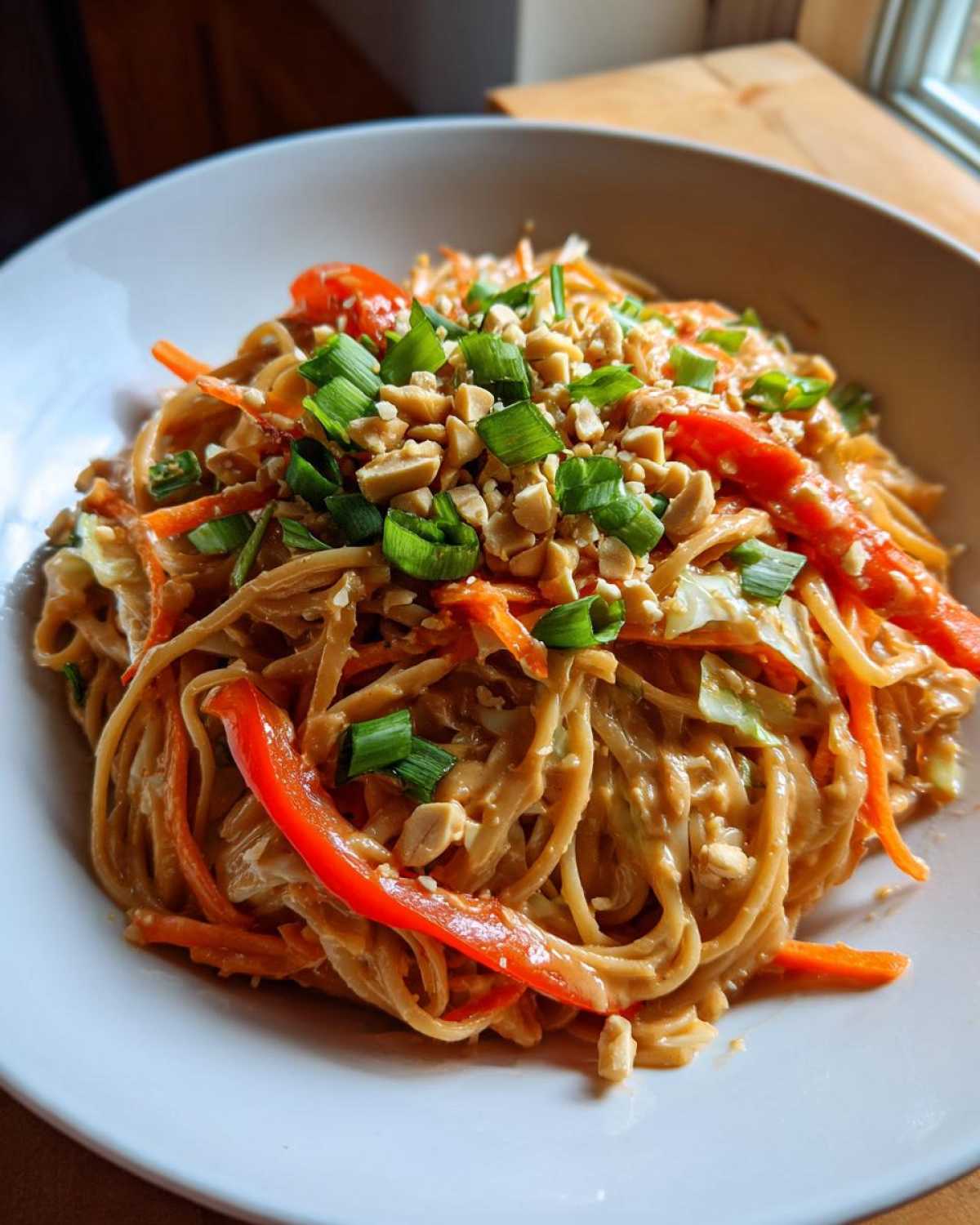
I usually serve this as a complete meal since it’s got carbs, protein (from the peanuts!), and tons of veg. But if you’re feeling ambitious, it pairs wonderfully alongside something grilled, like chicken skewers marinated in a little teriyaki or maybe even a few lightly seared slices of tofu if you’re keeping it vegetarian. For a lighter meal, a simple side salad dressed with just rice vinegar and a pinch of sugar works too. This is easily one of my favorite quick weeknight asian noodle dish options because it feels fancy without any real effort!
Storing Leftovers of Your Thai Peanut Noodles with Crunchy Veggies
I know you probably won’t have any leftovers because this stuff vanishes fast, but in case you manage to save some! Storing these correctly is vital if you want to enjoy the texture later. The key thing to remember is separation, especially because of all the amazing crunch we worked so hard to keep in those veggies.
If you’re planning to eat this the next day, I highly recommend storing the sauced noodles and the raw veggies in two separate airtight containers. Keep the garnish—the scallions and extra peanuts—on the side too. This keeps the cabbage and the sprouts from getting all soggy overnight. It’s the only way to preserve that fantastic texture!
When you go to eat the leftovers, these noodles are genuinely best served cold, straight from the fridge. The cold really helps set the sauce beautifully. However, if you absolutely *must* heat it up—and I get it, sometimes you just need warm noodles—you have to revive the sauce first. Stir in a tiny splash of hot water or maybe a splash of rice vinegar before you put it in the microwave for just 30 seconds.
That splash helps loosen the peanut butter binder that inevitably tightens up when it gets cold. Don’t overheat it, or you’ll steam those crunchy veggies into sadness! For all my detailed advice on keeping noodle dishes perfect all week long, check out my deep dive on meal prep peanut noodles storage!
Frequently Asked Questions About Thai Peanut Noodles
It’s funny how even the simplest dishes generate the most questions! I always try to cover the things I wish I knew when I first started making these. You’ll find that once you understand why the sauce balances the way it does, you can tweak it forever without fear.
If you’re looking for ways to adapt this for make-ahead lunches or different styles, check out my guide on cold peanut noodle salad ideas for inspiration!
Can I use different noodles for this Thai Peanut Noodles recipe?
Yes, absolutely! That’s the beauty of a great sauce; it clings to just about anything. I used spaghetti just because that’s what I had that day, but I often switch to rice noodles, which soak up the sauce really nicely. If you need a gluten free peanut noodles recipe variation, rice noodles are your best friend here. Even a nice whole wheat pasta works in a pinch if you are craving something heartier!
How can I make this a vegetarian peanut noodle bowls recipe?
Great question! If you use maple syrup instead of honey, this recipe is already completely vegetarian! It’s naturally full of veggie power thanks to all those colorful vegetables. If you want to bump up the protein to make it a more complete meal—a true vegetarian peanut noodle bowls situation—I highly recommend tossing in a cup of rinsed chickpeas or maybe some cubed, pan-fried crispy tofu right when you add the other crunchy vegetables. That added heft is fantastic!
You can find more ideas on balancing plant proteins in complete meals over at my page about vegetarian peanut noodle bowls.
What makes the sauce a savory peanut dressing for noodles?
That savory depth comes from hitting that perfect trifecta! It’s not just about the peanut butter. You need the deep umami and saltiness from the soy sauce—that’s the backbone. Then, you need the sharp counterpoint of the rice vinegar for tang. Finally, that touch of maple syrup rounds it all off, so it stops tasting harsh and becomes that complex, savory peanut dressing for noodles that perfectly seasons everything else. It’s dynamic, not just salty!
Nutritional Snapshot for Thai Peanut Noodles with Crunchy Veggies
So, you made this amazing dish, and now you’re wondering what your body is getting out of all that deliciousness. I always preach that food should taste incredible *and* make you feel good, which is why I tracked the basic nutritional values for this recipe. Remember, since we are using things like peanut butter and noodles, these are just estimates!
I’m trying to keep this light, especially since we use so many fresh vegetables and rely on unsaturated fats from the sesame oil and peanuts. Here’s the breakdown for one generous serving, based on the ingredients listed above.
- Serving Size: 1 serving
- Calories: 550
- Fat: 30g (Mostly healthy unsaturated fats!)
- Carbohydrates: 55g
- Protein: 20g
- Sugar: 15g
- Sodium: 750mg (This can vary a lot depending on your soy sauce!)
These numbers tell me this is a really satisfying meal—great carbs for energy and a solid chunk of protein to keep you full. I always keep an eye on the sodium since soy sauce is heavy there, so if you’re watching that, maybe use a low-sodium tamari next time you whip up your next batch of Thai Peanut Noodles with Crunchy Veggies!
PrintThai Peanut Noodles with Crunchy Veggies
A recipe for creamy Thai peanut noodles packed with crisp, fresh vegetables for texture contrast.
- Prep Time: 15 min
- Cook Time: 10 min
- Total Time: 25 min
- Yield: 4 servings
- Category: Main Dish
- Method: Tossing/No-Cook Sauce
- Cuisine: Thai-inspired
- Diet: Vegetarian
Ingredients
- 12 oz spaghetti or linguine noodles
- 1 cup creamy peanut butter
- 1/4 cup soy sauce or tamari
- 3 tablespoons rice vinegar
- 2 tablespoons maple syrup or honey
- 1 tablespoon toasted sesame oil
- 1 tablespoon fresh ginger, grated
- 2 cloves garlic, minced
- 1 teaspoon sriracha or chili garlic sauce (adjust to taste)
- 1/4 cup hot water (or more, for thinning)
- 1 large carrot, julienned
- 1 red bell pepper, thinly sliced
- 1 cup shredded red cabbage
- 1 cup bean sprouts
- 1/2 cup chopped scallions, for garnish
- 2 tablespoons chopped peanuts, for garnish
Instructions
- Cook the noodles according to package directions until al dente. Drain the noodles and rinse immediately with cold water to stop the cooking process and remove excess starch. Set aside.
- While the noodles cook, prepare the peanut sauce. In a medium bowl, whisk together the peanut butter, soy sauce, rice vinegar, maple syrup, sesame oil, grated ginger, minced garlic, and sriracha.
- Slowly whisk in the hot water, one tablespoon at a time, until the sauce reaches a smooth, pourable consistency. Taste the sauce and adjust seasoning if needed (add more vinegar for tang or syrup for sweetness).
- In a large bowl, combine the cooled noodles and the prepared peanut sauce. Toss well until all the noodles are evenly coated.
- Add the julienned carrots, sliced red bell pepper, shredded cabbage, and bean sprouts to the bowl. Toss gently until the vegetables are distributed throughout the noodles. Do not overmix, as you want the vegetables to remain crisp.
- Divide the noodles among serving bowls. Garnish each serving with chopped scallions and chopped peanuts. Serve immediately or chill for later.
Notes
- For gluten-free noodles, use rice noodles or gluten-free spaghetti.
- To make this dish vegan, ensure you use maple syrup instead of honey in the sauce.
- For meal prep, store the sauce separately from the noodles and vegetables, and combine just before serving to maintain maximum crunch.
- If you prefer a richer flavor, add 1 tablespoon of lime juice to the peanut sauce.
Nutrition
- Serving Size: 1 serving
- Calories: 550
- Sugar: 15
- Sodium: 750
- Fat: 30
- Saturated Fat: 5
- Unsaturated Fat: 25
- Trans Fat: 0
- Carbohydrates: 55
- Fiber: 7
- Protein: 20
- Cholesterol: 0