

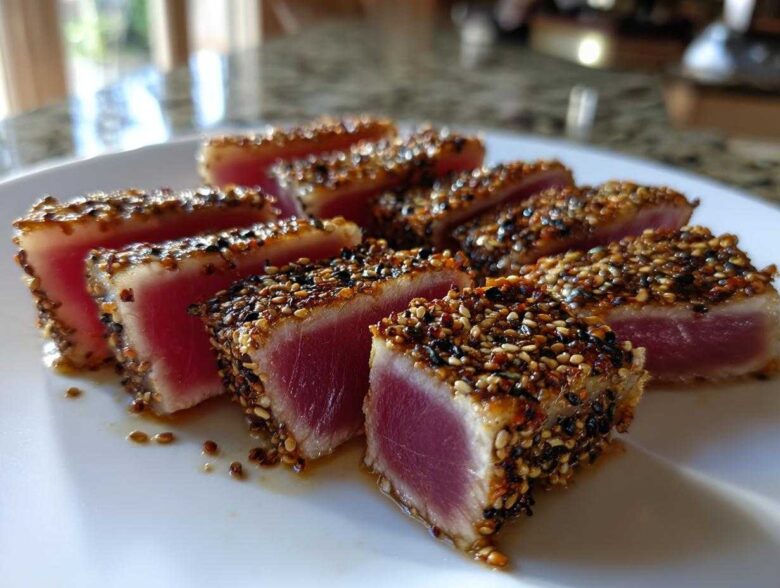
Okay, listen up! We all have those nights where we crave something truly special—something that tastes like we spent hours fussing over it—but we only have fifteen minutes before we’re starving. That’s where this recipe for Seared Ahi Tuna saves the day, every single time. Seriously, this is the fastest way to get a gourmet dinner on the table without cheating on quality. My biggest hurdle when I first tried pan-searing was getting that absolutely perfect crust without turning the center into shoe leather. But trust me, once you nail the high heat, you’ll basically feel like a culinary rockstar, and you’ll never look back. Before you start anything—and this is my number one secret—make sure you source the best sushi-grade tuna you can find. It makes all the difference!
Why This Seared Ahi Tuna Recipe Delivers Quick Seafood Perfection
I know what you’re thinking: “Gourmet seafood takes forever.” Not with this recipe! It’s designed for real life, meaning you can whip up something that looks like it came straight from a nice restaurant. It’s honestly the best quick seafood recipe I have in my back pocket. We are talking about being done, from prep to plate, in less than fifteen minutes. It’s amazing!
Here’s why I keep coming back to this simple method:
- It’s incredibly fast! The total time barely scrapes over the 14-minute mark, which is perfect for those crazy weeknights when you need a healthy dinner fast.
- The flavor is huge. That crust we build using the sesame seeds is just phenomenal—it adds crunch and warmth instantly.
- It’s super lightweight but incredibly satisfying. You feel full, but not weighed down, which is why I love it as a low-fat option.
Speed and Simplicity for Weeknights
Forget thawing anything overnight or complicated sauces! You spend maybe ten minutes whispering sweet nothings to your tuna while you whisk up the marinade, and then four minutes max doing the actual cooking. That’s the beauty of this recipe. It respects your schedule but still delivers that rich, melt-in-your-mouth experience you want from quality seafood.
Achieving the Perfect Crust on Seared Ahi Tuna
This is the make-or-break moment, right? The secret to beautiful Seared Ahi Tuna is heat—and I mean blazing hot! When you get that cast iron skillet screaming hot, you flash-cook the outside of the fish in sixty seconds flat. That crust seals in all the bright flavors from the soy and ginger, meaning the inside stays pristine, cool, and buttery soft. It’s the contrast that makes the whole thing sing!
Ingredients Needed for Perfect Seared Ahi Tuna
You don’t need a huge list of fancy things to make this taste incredible, but the two things you cannot skimp on are the quality of the fish and the freshness of the aromatics. Seriously, this recipe relies on your ingredients being top-notch, especially since the cooking time is so short. We are keeping the list tight so we can focus on technique.
Tuna Selection: The Key to Great Seared Ahi Tuna
Listen, if you are searing Ahi tuna, you absolutely MUST use sushi-grade tuna, or even better, sashimi-grade. This isn’t the time to grab whatever is on sale in the regular seafood case. We need quality yellowfin tuna because we are barely cooking the inside. If it isn’t safe to eat raw, you risk a horrible texture and, frankly, a terrible outcome. Look for tuna that’s a deep, vibrant red—almost purplish—with zero gray spots. That bright color tells you the fish is fresh and ready for a quick sear!
The Asian-Inspired Marinade Components
The marinade is simple, but it punches through with classic Asian flavors that pair perfectly with the richness of the fish. You need 2 tablespoons of sesame oil—this gives us a gorgeous nutty base. Then, 1 tablespoon of soy sauce or tamari for that salty depth that really makes this Asian tuna recipe shine. Don’t forget the fresh bits: 1 teaspoon of really finely grated fresh ginger and just 1 clove of garlic, minced super fine. Freshness here is key; powders just won’t cut it when you’re aiming for gourmet!
Step-by-Step Instructions for Seared Ahi Tuna
Okay, this is where the magic happens! Even though we have a very short ingredient list, the process needs focus, especially on timing. We want that gorgeous contrast, remember? You’re essentially creating a protective shell around the cool, tender center. Don’t stress, though; this whole cooking process is over before you know it. Just keep your mind on that super-hot pan!
Preparing the Tuna and Sesame Crust
First things first, you need to get your flavor bath ready. Whisk together the sesame oil, soy sauce (or tamari if you prefer!), that tiny bit of fresh ginger, and your minced garlic in a small bowl. Take your two beautiful tuna steaks and brush this liquid mix all over them—every side needs a nice, thin coating. Now, for the crust! Spread your mixed black and white sesame seeds onto a shallow plate. You must press each side of the marinated tuna firmly into those seeds! Don’t be shy; you want a nice, thick layer clinging on. Since this is a fast-cooking Asian tuna recipe, resist the urge to let it sit and marinate for hours. A quick coat is all it needs before hitting the heat!
Mastering the High-Heat Sear
This is the most important step for perfect Seared Ahi Tuna. Get your heaviest skillet—cast iron is the absolute best friend you can have here—over medium-high heat. You need it screaming hot! I mean, let it sit there for a good three or four minutes until you can almost see faint wisps of smoke. Do not add any extra oil to the pan; the fish coat is enough! Carefully lay those crusted steaks down. Now, time it! For that perfect rare/medium-rare center, you are searing for only 1 to 2 quick minutes per side. Flip gently and sear the other side for the exact same amount of time. That intense heat is what solidifies that crust and locks in everything delicious.
Resting and Slicing for Presentation
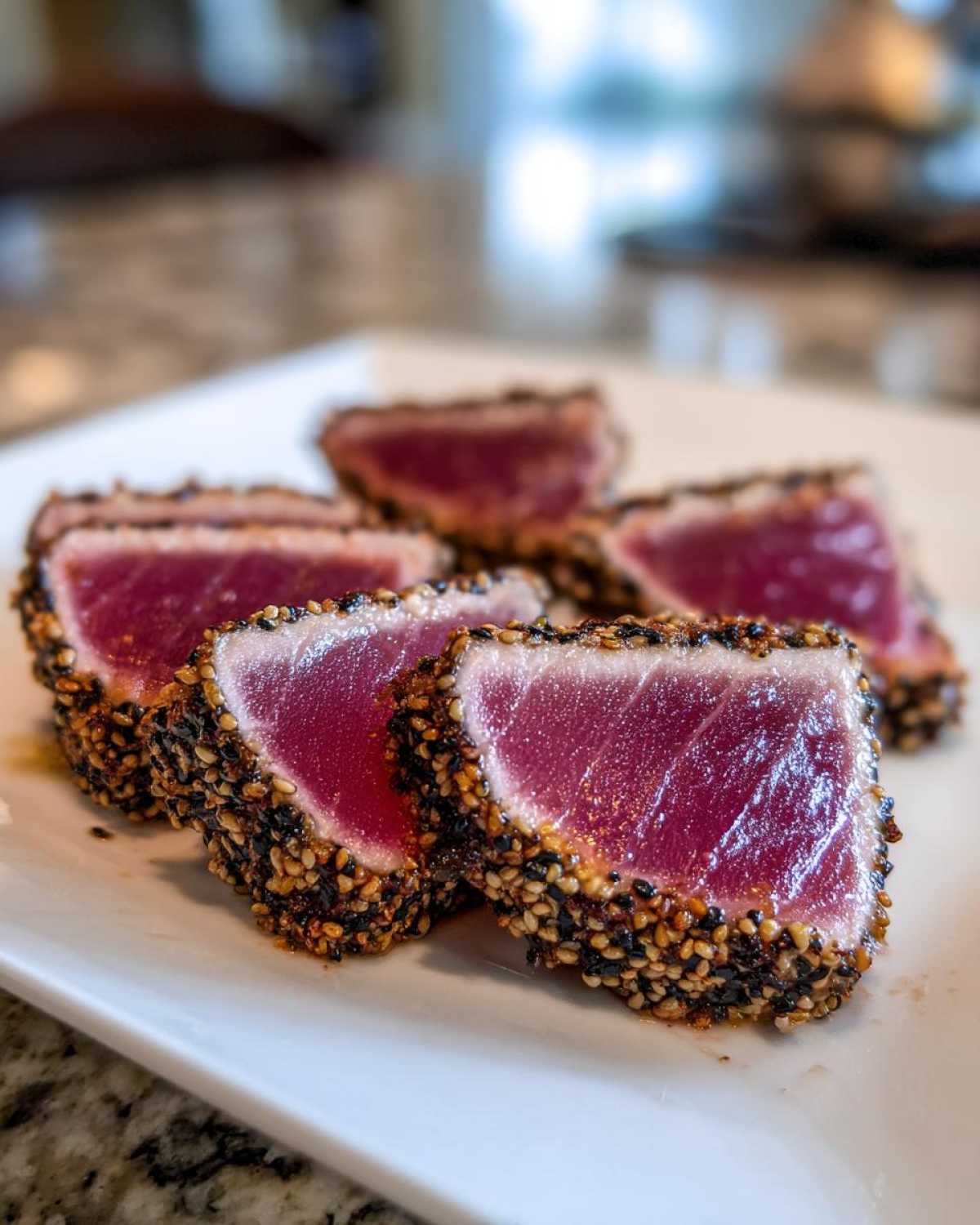
Once they come out of that inferno of a hot pan, immediately transfer your Seared Ahi Tuna steaks to a clean cutting board. Don’t touch them for five whole minutes! Seriously, walk away, pour yourself a glass of water, do anything but cut into them. If you skip the rest, all those beautiful juices you just worked so hard to keep inside will bleed out onto the board. After resting, use the sharpest knife you own and slice them thinly, cutting against the grain—this keeps every single piece tender. Finish with just a light sprinkle of fresh black pepper, and you are ready to serve!
Tips for Achieving Restaurant-Quality Seared Ahi Tuna
Look, anyone can throw tuna in a hot pan, but if you want that actual restaurant-quality bite—where the crust snaps and the inside is cool pink heaven—you need to pay attention to a few tiny technical details. I learned this through sad, gray-centered failures, so you don’t have to! Getting consistently perfect Seared Ahi Tuna is all about creating the right environment in your pan, right before the fish even touches the heat.
Choosing the Right Pan for Your Seared Ahi Tuna
If you use a flimsy, thin pan, you’re going to fail. I’m sorry, but it’s true! A thin pan loses its heat the second the cold tuna hits it, and instead of searing, you end up steaming the fish. You absolutely need something heavy that hangs onto heat like a bulldog. Cast iron is my number one go-to for this; it holds that high temperature perfectly, which is required for that one-minute-per-side crust. If you don’t have cast iron, a really heavy, thick-bottomed stainless steel skillet works almost as well. Just make sure you heat it empty until it’s smoking slightly before adding anything!
Slicing Technique for Uniform Seared Ahi Tuna
This step comes after the rest period, but it’s just as important for presentation and texture. Remember how I said we sear it fast? That means the middle is raw, and you want to show that off! You have to slice diagonally across the muscle fibers, which is called slicing against the grain. This shortens those tough fibers, making every single piece unbelievably tender. And please, use a rock-sharp knife. A dull knife will tear through that beautiful sesame crust we worked so hard to build, squishing the tuna instead of gliding through it. A clean, precise cut makes a huge difference, especially when serving this gourmet tuna!
Serving Suggestions for Your Asian Tuna Recipe
This perfectly seared fish is so versatile! Since we’re going for that flavorful, zesty profile, it demands something clean and bright underneath it. My favorite way is thinly sliced over a bed of mixed greens tossed lightly with a miso vinaigrette—it feels so decadent yet it’s a wonderfully healthy dinner option.
If you want a heartier meal, go for sticky steamed rice mixed with a tiny splash of rice vinegar. Imagine those beautiful sesame-crusted slices lying right on top—it instantly becomes a stunning gourmet tuna bowl. Or, try it alongside some simple steamed asparagus or lightly wilted bok choy. Just a squeeze of fresh lime over the top brings out all those beautiful ginger and garlic notes. Enjoy making this look fancy so fast!
Storage and Reheating for Leftover Seared Ahi Tuna
Okay, let’s talk leftovers. When you make a stunning, quickly cooked piece of fish like this, it’s usually gone in one sitting, right? But if you happen to have a scrap or two left over—maybe you sliced too aggressively—you need to know how to handle it. First thing: refrigeration is the only way to go, and this fish needs to be stored in an airtight container. Keep it chilly! But here’s my firm stance, and I won’t let you get away with ruining this perfect texture:
Do not, under any circumstances, try reheating this tuna! If you put those perfectly seared steaks back into a hot pan or microwave them, you’re going to turn what was supposed to be a tender, cool center into tough, gray disappointment. It’s just not worth it. The brief, high-heat sear is a one-time deal for the best flavor.
Instead of reheating, think about repurposing! Leftover, chilled tuna is fantastic eaten cold the next day, almost like a fancy canned tuna salad base. I love flaking the leftover pieces and tossing them into a bright, crunchy salad. Think about throwing it into a spicy slaw or even mixing it with a little bit of mayonnaise, Dijon, and those leftover sesame seeds for a seriously next-level tuna salad sandwich. It’s perfect cold for lunch the next day, especially when paired with a vibrant vinaigrette!
Frequently Asked Questions About Seared Ahi Tuna
I always get questions after people try this recipe the first time—which is a good sign, right? It means they want to make it again and they want to make it *perfect*! Here are the things I hear most often when folks are making their first batch of this amazing seared fish.
Can I use regular tuna instead of sushi grade for this Seared Ahi Tuna?
Oh, please don’t! I know it’s tempting when you see a cheaper package of tuna, but you simply *must* use sushi grade tuna here. Regular tuna hasn’t been handled or flash-frozen in the specific way required to ensure it’s safe to eat nearly raw in the center. Since we are only searing the outside for a couple of minutes, the middle remains cold and uncooked. If you use non-sushi-grade, you are risking your health right along with your dinner! For this specific recipe, only the highest quality that’s safe to eat raw will do the trick.
What internal temperature is best for this Asian tuna recipe?
This is where the precision really matters for that beautiful contrast! For what I consider the ideal texture—a nice, cool center but a hot crust—you are aiming for about 115°F to 125°F internally. If you have an instant-read thermometer, that’s your best friend! If you don’t, you rely on the timing we discussed: 90 seconds to 2 minutes per side on that ripping hot pan. Any longer than two minutes, and you start pushing that temperature up too high, and suddenly, your beautiful Asian tuna recipe starts getting dry around the edges.
Is Seared Ahi Tuna considered a healthy dinner option?
Absolutely, one hundred percent yes! If you’re looking for a genuinely healthy dinner that doesn’t taste like cardboard, this is it. Ahi tuna is lean, packed full of protein—over 30 grams per serving in our recipe!—and it’s full of those wonderful omega-3 fatty acids. We use sesame oil, which brings healthy fats, and since we aren’t adding heavy creams or deep-frying, this whole meal stays incredibly low in carbs and saturated fat. It’s quick, clean, and feels perfectly indulgent!
Nutritional Estimates for Seared Ahi Tuna
Even though this dish tastes like something that took hours of careful plating and expensive ingredients, it’s actually a fantastic choice if you’re keeping an eye on what you eat. This simple preparation of seared fish keeps things light and clean. Because we aren’t deep-frying and we use just a tiny bit of oil for the marinade, it stays super low in unnecessary fats.
Here is a quick breakdown of what you can expect per serving, based on the two-steak recipe yield. Remember, nutrition is always an estimate, especially since the exact size of your tuna steaks can vary a little bit!
- Calories: Around 280 calories—that’s powerhouse energy for the entire meal!
- Protein: Stellar at about 32 grams per serving. You’ll feel satisfied, no doubt.
- Total Fat: Only about 15 grams, most of which are the good, unsaturated kind.
- Carbohydrates: Almost negligible, staying right around 4 grams.
- Sodium: About 350mg. Keep in mind this comes mostly from the soy sauce we use in the quick marinade.
It’s a wonderful, light foundation for any meal. It pairs well with high-volume, low-calorie sides, making it a genuine staple for a quick and delicious healthy dinner when you need one!
Share Your Perfectly Seared Ahi Tuna Experience
Now that you’ve mastered the sear and your kitchen smells incredible—seriously, the aroma of toasted sesame and ginger is addictive—I want to hear all about it! Did you get that perfect rare center? Did your cast iron skillet do its job and deliver that crispy crust?
Don’t keep this success story to yourself! I absolutely love hearing how my recipes work out in other kitchens. Please take a moment to leave a star rating right here on the page; that little bit of feedback helps other home cooks know that this seared ahi tuna is definitely worth their time.
And if you snapped a photo of those stunning, thinly sliced pieces glistening on your plate—especially if you served it with something fun—I need to see it! Tag me on social media! Show off your impressive speed and technique. There is nothing better than seeing someone else successfully conquer a dish that tastes this gourmet yet takes barely any time at all. Happy cooking, and can’t wait to see your results!
PrintSimple Seared Ahi Tuna Steaks
A quick recipe for perfectly seared sushi-grade Ahi tuna with an Asian-inspired crust.
- Prep Time: 10 min
- Cook Time: 4 min
- Total Time: 14 min
- Yield: 2 servings
- Category: Dinner
- Method: Pan-Searing
- Cuisine: Asian-Inspired
- Diet: Low Fat
Ingredients
- 2 (6 ounce) sushi-grade Ahi tuna steaks
- 2 tablespoons sesame oil
- 1 tablespoon soy sauce or tamari
- 1 teaspoon grated fresh ginger
- 1 clove garlic, minced
- 1/4 cup sesame seeds (mixed black and white)
- Pinch of black pepper
Instructions
- In a small bowl, whisk together the sesame oil, soy sauce, ginger, and garlic. Brush this mixture evenly over all sides of the tuna steaks.
- Place the sesame seeds on a shallow plate. Press each side of the tuna steaks firmly into the seeds until well coated.
- Heat a heavy skillet (cast iron works well) over medium-high heat until very hot. Do not add extra oil to the pan.
- Carefully place the crusted tuna steaks in the hot pan. Sear for 1 to 2 minutes per side for rare to medium-rare.
- Remove the tuna from the pan. Let the steaks rest on a cutting board for 5 minutes before slicing thinly against the grain.
- Sprinkle with black pepper before serving.
Notes
- For a rarer center, sear for 60 to 90 seconds per side.
- Use a very sharp knife to slice the tuna after resting for clean cuts.
- Serve immediately over salad greens or with steamed rice.
Nutrition
- Serving Size: 1 steak
- Calories: 280
- Sugar: 1
- Sodium: 350
- Fat: 15
- Saturated Fat: 2
- Unsaturated Fat: 13
- Trans Fat: 0
- Carbohydrates: 4
- Fiber: 1
- Protein: 32
- Cholesterol: 75